Jerusalem is living with a fascinating contradiction. On one side stands a city where ultra-Orthodox and religious communities hold considerable demographic and political influence, and voting patterns consistently give significant power to Haredi parties and the Israeli right. On the other, as Hanukkah 2026 approaches, Jerusalem is preparing for an almost European-style winter celebration, with illuminated installations, music festivals, performances by major stars, cultural attractions and seasonal entertainment. Can this deeply traditional city transform itself, even for a few weeks each year, into a vibrant international destination?
How Religious and Ultra-Orthodox Is Jerusalem?
The demographic figures tell a revealing story. According to Israel’s Central Bureau of Statistics, Haredi Jews accounted for approximately 29% of Jerusalem’s total population at the end of 2025, but nearly half of its Jewish and other non-Arab population.
Figures published by the Jerusalem Institute for Policy Research for 2023 indicate that approximately 47% of the expanded Jewish population identified as ultra-Orthodox, 24% as religious or very religious, and just 15% as secular.
The political picture reinforces this demographic reality. In Israel’s 2022 parliamentary election, the ultra-Orthodox United Torah Judaism and Shas parties together received approximately 42% of valid votes cast in Jerusalem, while Likud secured another 19%.
Haredi political influence is therefore not a marginal feature of Jerusalem. It is a central component of the city’s public and political landscape.
Is Hanukkah Turning Jerusalem Into an International City?
Against this backdrop, Jerusalem’s Hanukkah program presents a strikingly different image.
The NEXT concert production, featuring Omer Adam, Idan Amedi, Rita, Osher Cohen and Odaya, joins the Ein Kerem Music Festival, children’s festivals, illuminated attractions at the Jerusalem Botanical Gardens and performances across the city’s cultural institutions.
Safra Square will host Windows of Light, an exhibition featuring 12 Hanukkah menorahs inspired by Jewish communities around the world.
Guided menorah tours, neighborhood theater performances and live music will add another dimension to the celebrations.
Together, these events reflect a familiar international urban trend: cities using winter festivals, illuminated public spaces and cultural entertainment to attract visitors, encourage tourism and stimulate local businesses.
Can Jerusalem Be Both Conservative and Cosmopolitan?
The answer is more complicated than the festive lights might suggest.
Jerusalem is far from exclusively ultra-Orthodox. Its population also includes a large Arab community, religious, traditional and secular residents, students and diverse cultural groups.
Yet a colorful festival does not automatically transform a city’s social structure or political balance.
The deeper question is whether Jerusalem’s open, internationally oriented atmosphere will remain confined to seasonal celebrations or become a permanent feature of urban life.
Can the city support vibrant cultural activity throughout the year while preserving its religious and communal identities?
Perhaps Jerusalem’s distinctive character lies precisely in this tension: a city that does not necessarily have to abandon its traditions to embrace the wider world.
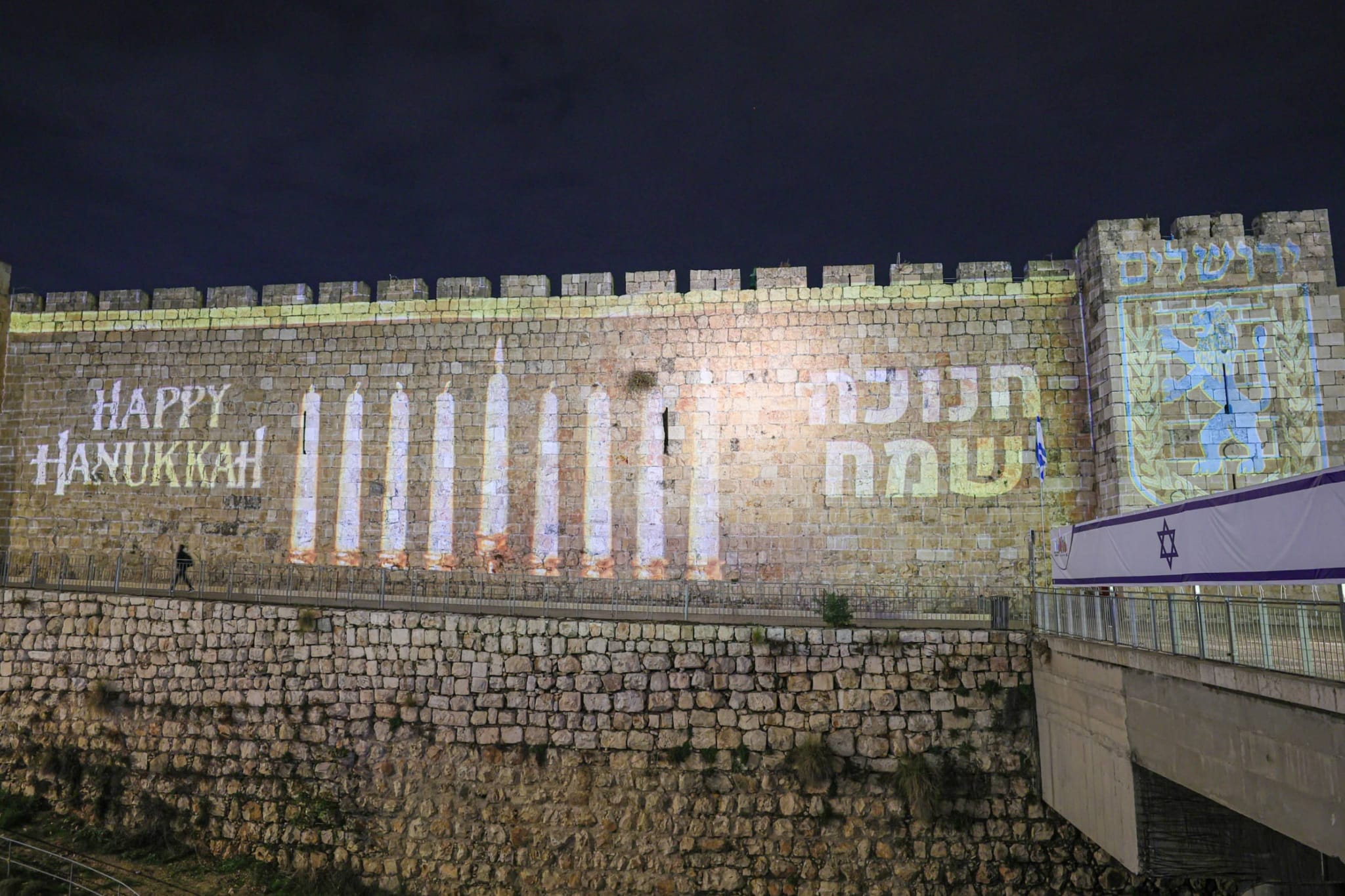
But the real test will not be how many lights illuminate Jerusalem’s ancient walls during Hanukkah. It will be how much of that openness remains once the holiday is over.