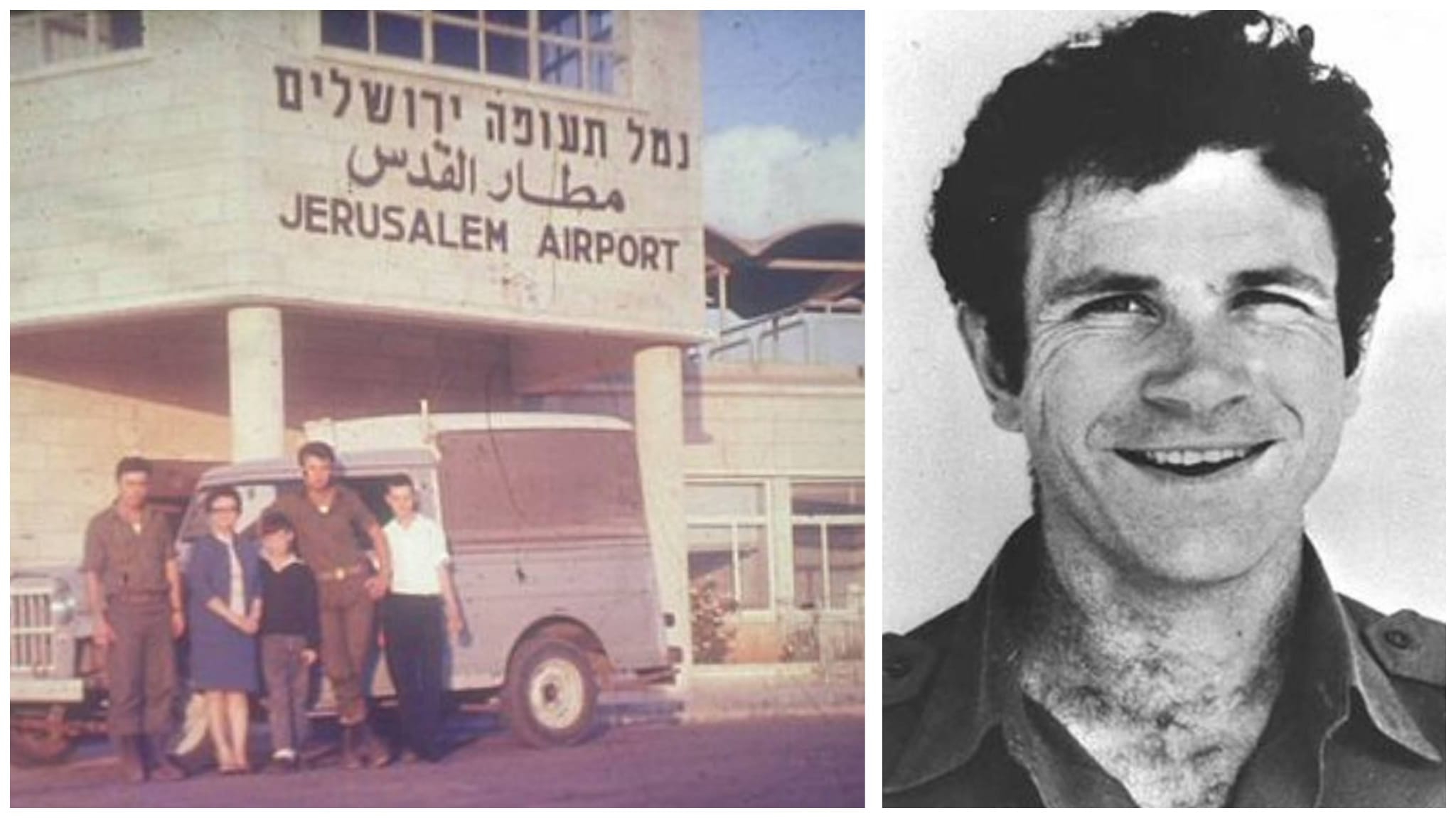
The Israeli government is expected to approve this week a proposal by Heritage Minister Amichai Eliyahu to establish a national heritage center at the historic Atarot airport site in northern Jerusalem, near Qalandiya. The center will include a special wing honoring Lt. Col. Yoni Netanyahu, who was killed while commanding “Operation Jonathan” to rescue the hostages in Entebbe, 50 years ago. In the first stage, about NIS 3 million will be allocated from the Heritage Ministry budget for planning.
The site is considered a unique heritage asset because of its combination of pioneering settlement, aviation and heroism, and the center will emphasize “a continuum of aerial power and Israeli sovereignty.” The project includes the restoration of the abandoned airport buildings, led by the historic terminal, and their transformation into an educational and tourist center that will present the development of aviation in Jerusalem and the Land of Israel, as well as the story of Jewish pioneering settlement at the site.
How did Atarot Airport become a historic symbol of Jerusalem?
Atarot is one of the early examples of pioneering settlement in the Judean Hills, north of Jerusalem. After World War I, a group of pioneers arrived and established a farm there, and in 1923 a moshav workers’ settlement named Atarot was founded and joined the Moshavim Movement. It was the first moshav in the Judean Hills.
During the 1929 riots, the community was almost completely destroyed, but it repelled the attackers. During the Great Arab Revolt from 1936 to 1939, the settlement suffered many attacks and five of its members were killed. In the War of Independence, the moshav was under a severe siege. In April 1948, women and children were evacuated. On May 14, 1948, the day Israel declared independence, the remaining members were evacuated and joined the defenders of Neve Yaakov. The next day, they saw their homes go up in flames. The Arab Legion and local villagers destroyed the site. The members of Atarot later resettled in Wilhelma, now Bnei Atarot.
The airport is a central element in the history of the area and the physical basis for the planned heritage center. The field symbolizes the history of civil aviation in Jerusalem, from the British Mandate, through Jordanian rule, to the State of Israel.
The British established the airfield near Qalandiya, on land that was partly expropriated from the Atarot moshav. In its early years, from 1918 to 1924, the field consisted only of a dirt runway and served British officials. Later, a concrete runway was built and the field was also used for civilian flights. After the War of Independence, the Jordanians rebuilt and expanded the airfield, while destroying the remains of the Atarot moshav.
The first half of the 1960s marked the peak years of the airport. It served thousands of passengers on international flights to Arab countries and Europe and became the gateway to East Jerusalem. After the Six-Day War, Israel operated it as a civilian airport for domestic flights. The airport was finally closed in 2000, during the Second Intifada, because of security concerns, as it is surrounded by Palestinian neighborhoods. Today, it stands abandoned.
Why do Palestinians oppose the new heritage center at Atarot?
The plan to establish a national heritage center and honor Yoni Netanyahu at the historic Atarot airport has sparked sharp criticism from Palestinians. For them, the airport symbolizes a potential for sovereignty and connectivity. Turning it into an Israeli heritage center, alongside planned residential construction in the area, cuts the geographic continuity between East Jerusalem and Ramallah, and prevents any practical possibility of a Palestinian capital in the eastern part of the city. From the Palestinian perspective, the center “documents the story of Jewish ‘colonial’ settlement” on the ruins of a Palestinian symbol, while erasing Palestinian history and embedding the Israeli narrative.