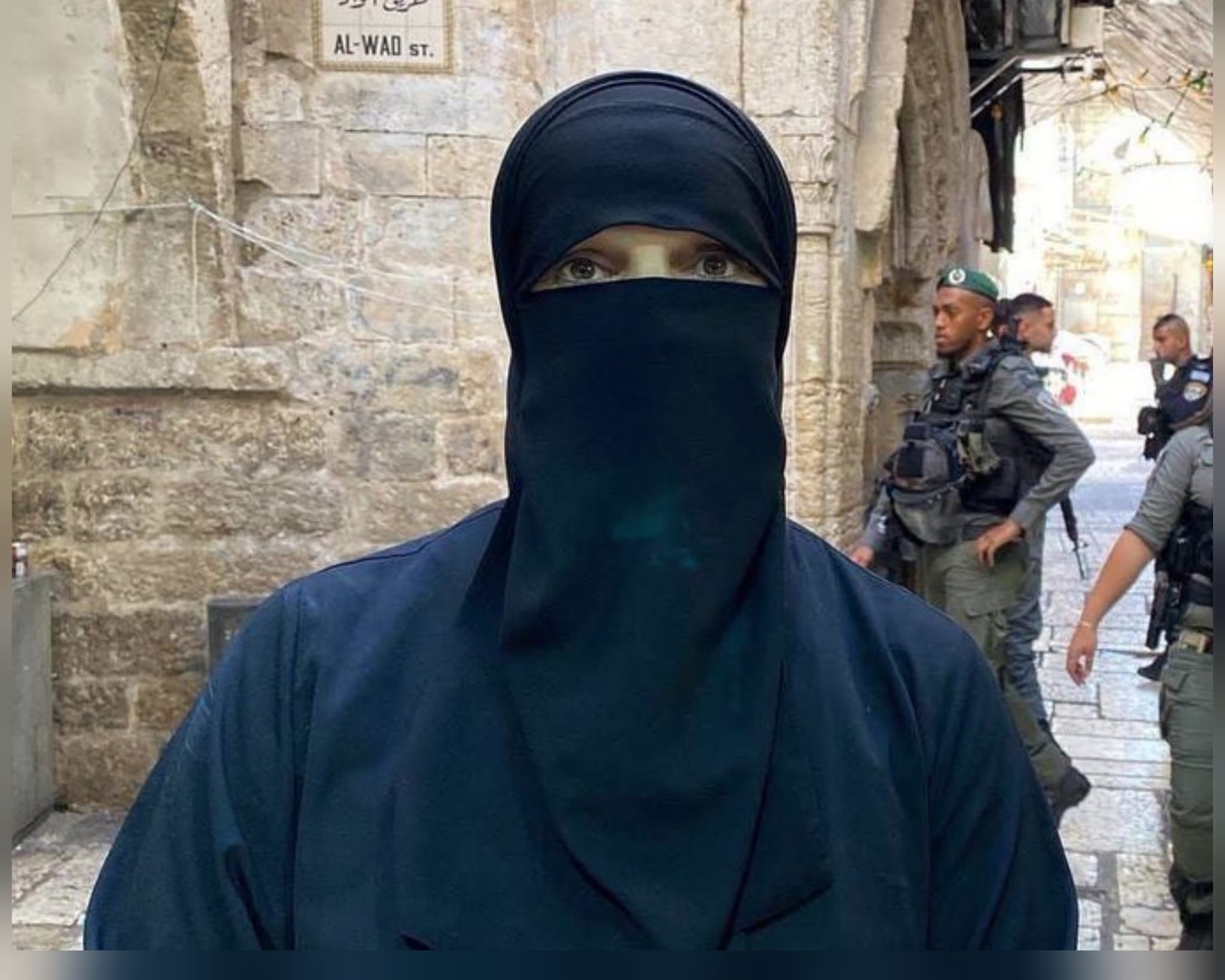
Muntaha Amara, an Israeli Arab and one of the most recognized and influential Muslim female activists operating around the Al-Aqsa Mosque compound in Jerusalem, was once again banned this week from the Temple Mount for a period of six months.
On April 9, 2026, following the reopening of Al-Aqsa Mosque after a prolonged closure during the war with Iran, Amara arrived at the Temple Mount compound. She was detained by police forces near Bab al-Hutta Gate in Jerusalem’s Old City. After her detention, she was taken for a hearing at the Kishle police station. Following several hours of questioning, Amara was released and handed a temporary one-week ban from the Temple Mount. In recent days, Jerusalem District Police Commander ניצב Avshalom Peled decided to extend the temporary order into a six-month ban.
Responding to the decision, Amara told media outlets that the move was “an attempt to empty the mosque of its worshippers” and insisted the restriction would not stop her activism. She emphasized her deep religious connection to the site and described the measure as “political persecution.”
Who Is Muntaha Amara and Why Is She So Influential at Al-Aqsa?
Muntaha Amara is considered a key figure in the religious and political struggle surrounding the Temple Mount. For her Muslim-Palestinian supporters, she is seen as a courageous “guardian” defending the Islamic identity of the holy site. For Israeli security authorities, however, she is viewed as a provocative figure associated with extremist ideology that threatens stability in Jerusalem.
Amara lives in the village of Zalafa near Umm al-Fahm in northern Israel. She emerged from the Islamic Movement in Israel and dedicated years of her life to promoting the idea of “Ribat” – maintaining a constant Muslim presence at Al-Aqsa to prevent any division of the holy site between Muslims and Jews. She is strongly identified with the Murabitat movement, a group of Muslim women activists active at the compound, and has become widely known among Palestinians for documenting her presence, arrests and bans on social media, earning significant support across the Palestinian street and the broader Muslim world.
Amara is also the niece of Sheikh Raed Salah, the former leader of the northern branch of the Islamic Movement in Israel, which was outlawed in 2015. She is considered one of the leading figures continuing his path regarding the defense of Al-Aqsa. Amara adopted his well-known slogan, “Al-Aqsa is in danger,” and promotes it through physical presence and activist protest.
Due to her activities, Amara has been banned dozens of times over the years from both the Temple Mount and parts of Jerusalem’s Old City, for periods ranging from weeks to several months. She is known for standing along the routes used by Jewish visitor groups entering the compound and shouting “Allahu Akbar” alongside religious protests. Israeli police view such actions as attempts to inflame tensions and potentially spark violence. As part of the Murabitat movement, Amara was previously accused of receiving support or guidance from figures linked to the northern branch of the Islamic Movement or Hamas, organizations Israel classifies as illegal or terrorist groups. Her social media posts, calling on Muslims to arrive en masse at Al-Aqsa to “defend” it from what she describes as “settler invasions,” are regarded by Israeli security officials as direct incitement to violence and terrorism.
Who Stands Alongside Muntaha Amara?
Muntaha Amara is married to Dr. Wajih Amara, a religious scholar and academic known among Muslims in Israel as an expert in Islamic jurisprudence and Islamic studies. He holds a doctorate in the field and regularly lectures on religion and Islamic law. Like his wife, he is identified with the ideology of the northern branch of the Islamic Movement before it was outlawed.
While Muntaha serves as the visible activist figure on the ground at the center of protests and confrontations around Al-Aqsa, Wajih operates more in the educational and ideological arena. He publicly supports his wife’s activities and describes them as both a religious and national duty.
Among supporters of the northern branch, the couple is often viewed as a symbolic “royal couple,” combining religious leadership and scholarship through Wajih with political activism and constant presence at holy sites through Muntaha.