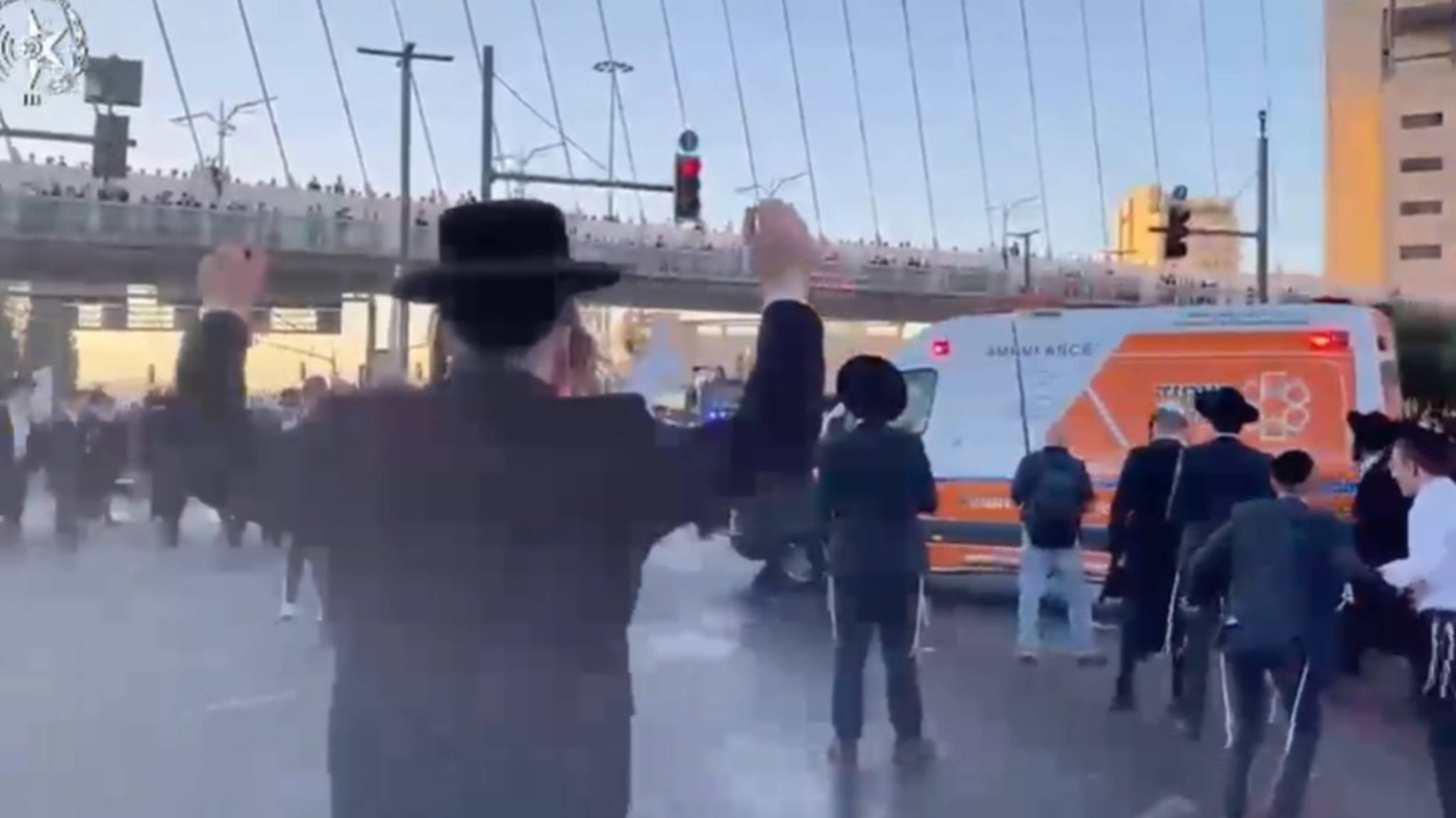
Ultra-Orthodox protests in Jerusalem over the draft law and the arrest of yeshiva students accused of desertion are entering a sharper stage, after previous demonstrations in the city already included roadblocks, public disorder and clashes with police. This time, according to sources familiar with the protest organization, the direction is clear: not just another localized demonstration, but an attempt to create broad traffic paralysis across the city.
The main flashpoints are expected to include the Chords Bridge at the entrance to Jerusalem, Bar-Ilan Street and the Har Hotzvim area. These are not just busy roads. They are major arteries that hold together large parts of the city’s movement. A blockage in one of them quickly affects the entrances to Jerusalem, bus routes, access to workplaces, schools, medical appointments and commercial areas. A 15-minute drive can turn into two and a half hours of exhausting gridlock, and sometimes traffic simply stops.
Why is the draft law setting Jerusalem’s streets on fire again?
At its core, the draft law is meant to regulate the status of ultra-Orthodox yeshiva students in relation to compulsory military service in Israel: who will enlist, who will continue religious study, what the recruitment targets will be, and what happens to those who fail to report. After earlier exemption arrangements expired, and court rulings required the state to enforce the draft obligation more equally, the issue shifted from a long-running political dispute into a direct confrontation between the state and parts of the ultra-Orthodox public.
The arrest of ultra-Orthodox deserters, young men who did not report for service or settle their status with the military authorities, is seen by some factions as a red line. For them, this is not only a struggle against service in the IDF, but a battle over the ability to preserve the yeshiva world and the ultra-Orthodox way of life as they understand it.
מחאת החרדים בכניסה לירושלים pic.twitter.com/3IavOcqXob
— jerusalem online (@Jlmonline) June 2, 2026
Which roads are blocked in Jerusalem draft protests?
Jerusalem is especially vulnerable to roadblocks. Its topography, limited traffic corridors and overloaded public transportation network turn every protest site into a citywide pressure point. When demonstrators enter the roadway near the Chords Bridge, on Bar-Ilan Street or close to Har Hotzvim, the disruption does not stay there. Bus lines get stuck, routes are canceled, drivers search for detours, and even residents far from the protest discover that the whole city has become tangled.
At the same time, these protests again demonstrate the organizing power of Jerusalem’s ultra-Orthodox public. Within a short time, different groups can bring hundreds, and sometimes thousands, into the streets, circulate messages through closed community networks and internal leadership channels, and create public pressure that is immediately felt.
“We will not give up,” says a source close to the protest organizers. “If our community is paying the price of deserters being arrested, then Jerusalem will also pay a price. The message is clear: we will die rather than enlist.”
For residents of the city, the meaning is much simpler: another day in which leaving home becomes a traffic gamble, and another protest in which the battle over the draft law rolls directly onto the road.