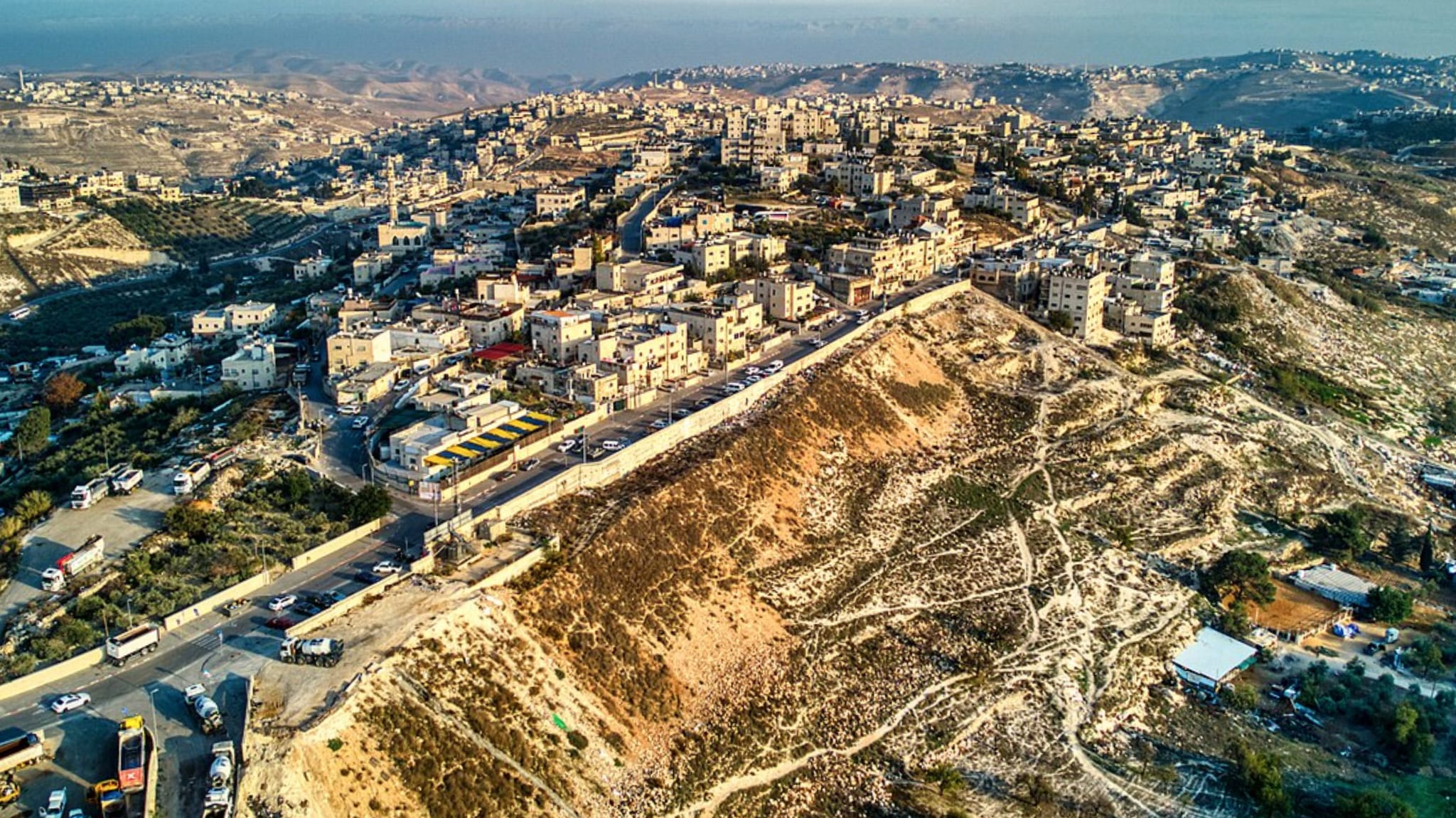
The Jerusalem District Planning and Building Committee approved in early July the deposit of the “Umm Lison Residential Complex” plan for public objections. Umm Lison is an extension of the town of Sur Baher and is located near Jabal Mukaber in southeastern Jerusalem.
The project, initiated by the Topodia company, includes the construction of 450 new housing units for Jews in the heart of the East Jerusalem neighborhood. It marks a significant breakthrough after the committee delayed the plan for more than two years due to planning obstacles stemming from the need to widen local roads. The plan ultimately moved forward after Israeli planning authorities, led by the Jerusalem Municipality, joined as co-applicants to help break the deadlock.
The plan covers an area of approximately 12 dunams. The project proposes a dramatic architectural change for the area, with residential buildings reaching up to 10 stories, in sharp contrast to the low-rise construction that currently characterizes the neighborhood. The developers’ main objective is to establish a protected and secured neighborhood for the Jewish population in the heart of East Jerusalem.
How Were the Lands for the Umm Lison Project in Jerusalem Acquired?
From a legal perspective, the plan is based on historic property rights. The land was originally purchased by a Jewish family in the 1930s. Topodia located the legal heirs, acquired the rights from them and advanced the project in close coordination with the Administrator General at the Ministry of Justice, which manages properties with Jewish ownership links dating from before 1948.
Topodia is controlled by an Australian company and supported by a network of Jewish philanthropists and businesspeople from abroad. Key figures in the company include Australian millionaire Kevin Bermeister and right-wing activist Yehuda Regones, a former spokesperson for the Elad organization.
The group is leading other similar and sensitive projects in Jerusalem, including the expansion of the Nof Zion neighborhood – a mostly inhabited neighborhood in southeastern Jerusalem, in Jabal Mukaber, where the second phase is in an advanced stage of construction. Topodia is also promoting plans in Givat Shaked – a neighborhood in southwestern Jerusalem, near Beit Safafa, which is currently in the planning and licensing stages ahead of construction.
The position of the Jerusalem Municipality and the local planning committee is broadly supportive of exercising regulated land ownership rights and increasing the housing supply. They also assisted, as noted, in removing the project’s transportation obstacles. The plan, however, has triggered strong opposition from local residents and left-wing organizations such as Ir Amim. Opponents argue that land registration procedures are being used in a one-sided manner and that constructing residential towers exclusively for Jews in the heart of a densely populated Arab neighborhood would damage the urban fabric and create prolonged political and security friction in the area.