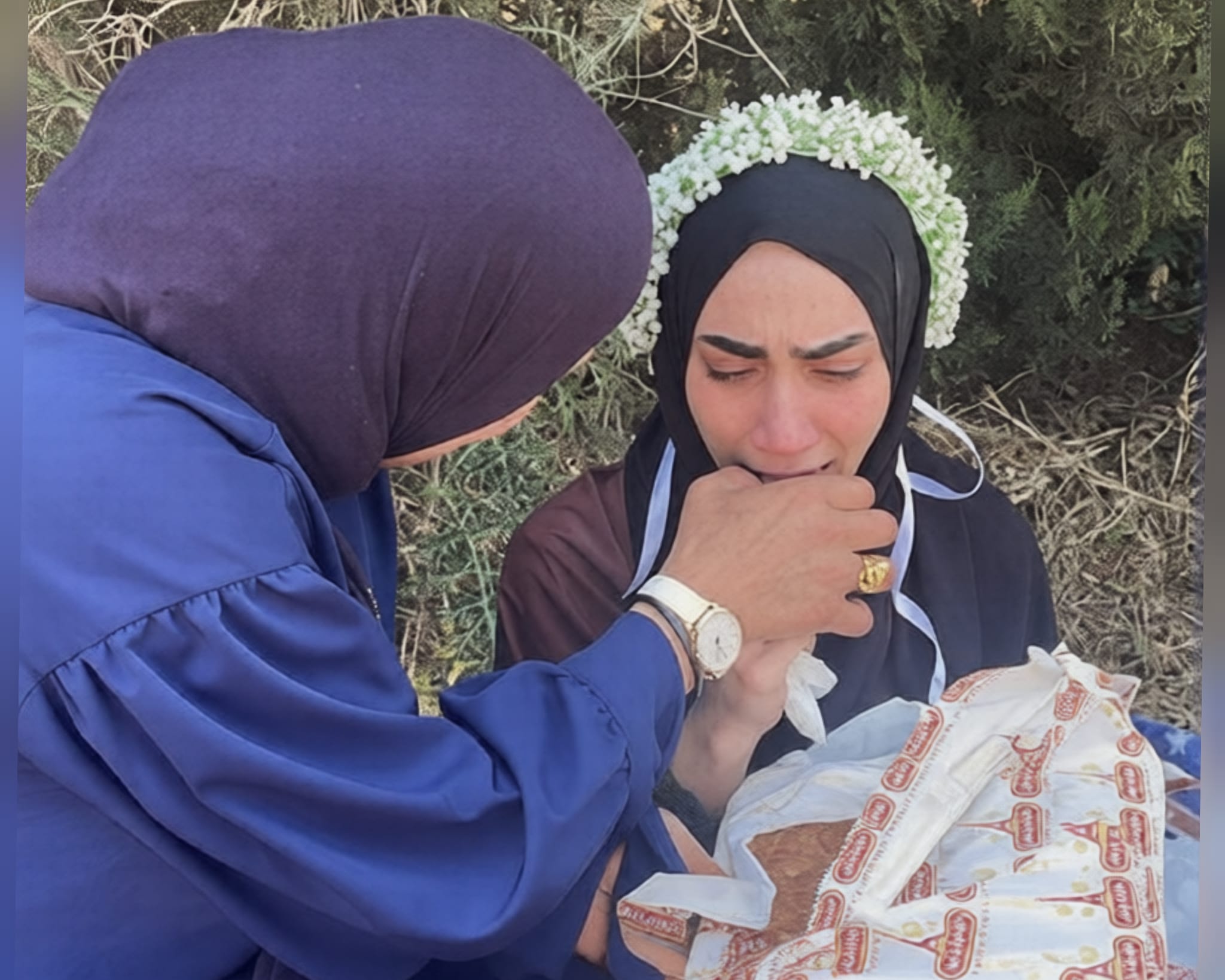
Tasnim Barakat Odeh, 23, a law student from the Shuafat refugee camp in northern Jerusalem and a Palestinian social media activist who incited terrorism, was released this week after serving 17 months in prison for a series of offenses involving identification with a terrorist organization and incitement to terrorism. Her mother, who welcomed her at the prison gates, placed a flower crown on her head.
Who is Tasnim Odeh from the Shuafat refugee camp in Jerusalem?
Tasnim’s father, Barakat Mousa Odeh, carried out a ramming attack on October 30, 2022, at the Nabi Musa and Almog junctions on Route 1 from Jerusalem to Jericho. During the attack, he struck five soldiers and wounded them, before being killed by security forces. Two days later, Tasnim posted on her TikTok account a photo of her father with text that read, among other things: “The heroic martyr Barakat Odeh fell heroically after carrying out the ramming attack near Jericho.”
In another post, she published a video of her father with the caption: “Barakat Odeh, the son of al-Eizariya, the army runs away from him. In the ramming attack he turned them into pieces.”
What did Tasnim Odeh post after Yahya Sinwar was killed?
On August 7, 2024, shortly after the killing of Hamas leader Ismail Haniyeh, Odeh published a photo of him and Yahya Sinwar with Arabic text that read: “If one master among us leaves, another master rises and says what the honorable one said: act. We pledge allegiance to you, Abu Ibrahim, we pledge allegiance to you.”
On October 17, 2024, one day after Yahya Sinwar was killed, Tasnim posted a video on her TikTok account with the caption: “Even if he ascended to the heavens, he achieved what he wished for and worked for. Entangled and surrounded by prisoners (hostages), and not in a deep tunnel. Instead, he struck and erased the narratives of the electronic flies’ army with his own blood.”
Jerusalem Magistrate’s Court Judge Amir Shaked, who convicted Tasnim Odeh and sentenced her to 17 months in prison, wrote in his ruling, among other things: “The fact that the defendant, the daughter of a terrorist, published such posts several days after the attack indicates a real possibility that these publications would lead to the commission of an act of terrorism. In her publications she conveyed the message that although she was left without her beloved father, she supports the circumstances of his death, and praises and glorifies the fact that he was a terrorist who died while carrying out an attack. The message that the family of a terrorist who carries out an attack supports him, instead of disavowing his actions and condemning them, or at the very least being silently ashamed of him, is a significant message that has the power to incite the commission of an act of terrorism.”