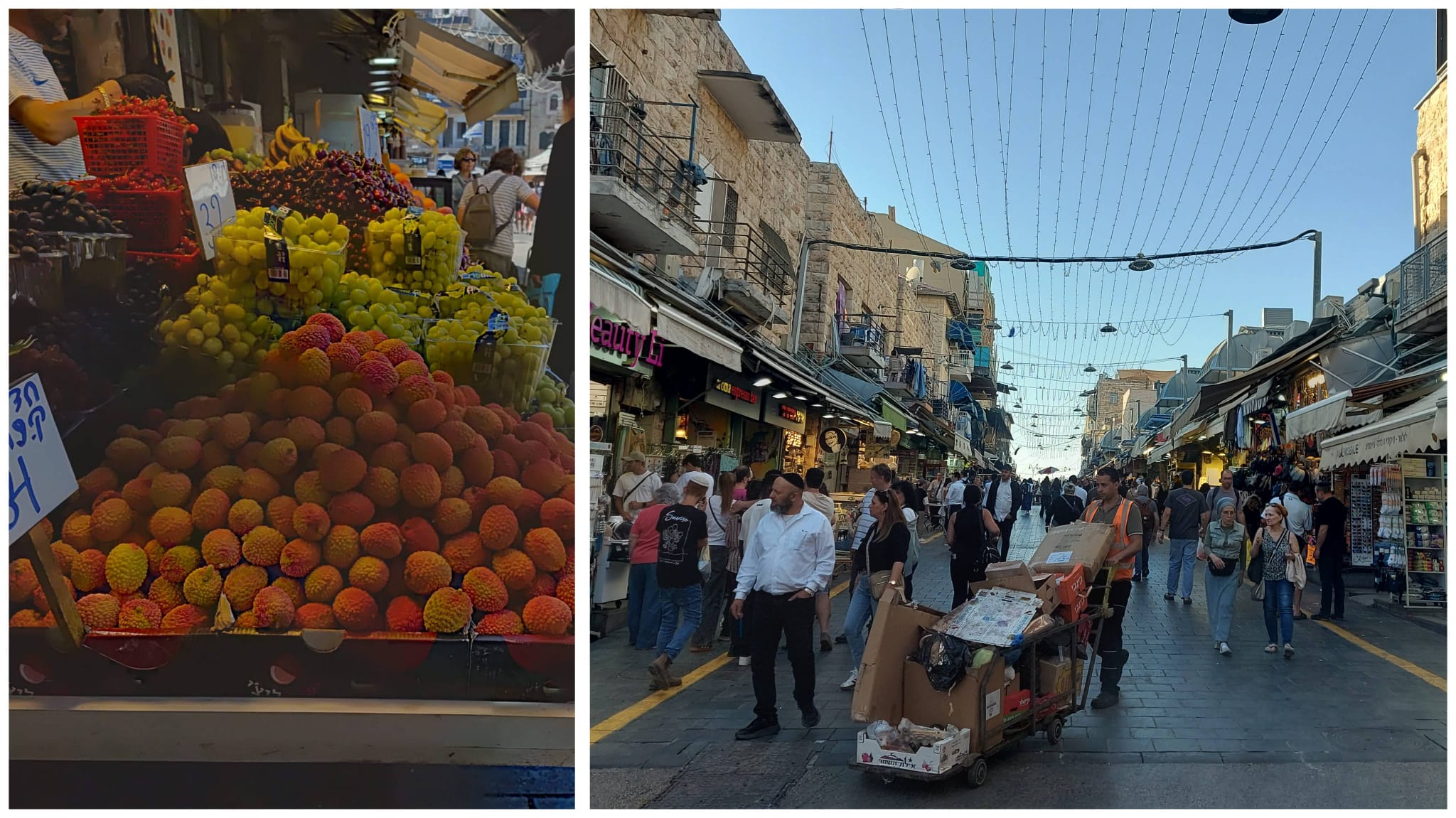
Lychee, which comes from the Far East, has conquered entire countries, but in Jerusalem it remains a mysterious visitor. Who falls in love with it, why do most passersby walk past without stopping, and what kind of courage do the few Jerusalem greengrocers who sell it display, knowing that by the end of the day they may be left with most of the expensive fruit? These are the questions raised by the spiky fruit whose flavor remains relatively unfamiliar at the city’s Mahane Yehuda Market.
Why Has Lychee Failed to Win Over Mahane Yehuda Market in Jerusalem?
The light rail glides slowly along Jaffa Street in Jerusalem. The stream of shoppers spreads into the alleys of Mahane Yehuda Market and flows past piles of orange apricots and other summer fruits. The air carries the scent of orchards, fields and vineyards. And the voices of the vendors.
Within this celebration of color, one fruit hides as though it has arrived from another world:
Small, pink and wrapped in a rough, mysterious peel. Its price ranges from 25 to 34 shekels for half a kilogram, and it appears at only a limited number of stalls. Shoppers stop beside it, look with curiosity, ask a question or two and move on. Lychee, one of Asia’s most beloved fruits, is still struggling to win the heart of the Jerusalem consumer.
Around the world, lychee is widely known and regarded as a sought-after delicacy. It originated in southern China and spread from there to many countries across the Far East, including India, Thailand, Vietnam and other places where it is considered a festive fruit and even a symbol of abundance and good fortune. In Israel, and especially in Jerusalem, it remains almost unknown.
How Do You Eat Lychee, and Why Does Its Price Put Shoppers Off?
The first reason may be the appearance of the lychee, and the other, well, is the price.
Either way, unlike fruits that are immediately obvious to eat, lychee requires some advance guidance. Those who taste it once discover an experience that produces sounds of pleasure. Its sweet flavor, soft texture and floral aroma create a combination that is difficult to find in other fruits. It is no coincidence that some describe falling in love with lychee as the result of one surprising and addictive bite.
Beyond its flavor, lychee is rich in vitamin C, contains antioxidants and provides a respectable amount of minerals and dietary fiber. In the world of nutrition, it is considered a fruit with high nutritional value relative to its modest size.
Perhaps that is exactly why it continues to appear every summer at the few stalls that still believe in it. Like a rare book on a shelf crowded with bestsellers. In general, many fruits and vegetables have earned affection through songs and stories. The apple is the hero of fairy tales, grapes star in songs, and even the grapefruit, princess of the orchards, has received its own tribute. And lychee? Perhaps it is known and celebrated in foreign literature and Asian culture.
And while Jerusalem’s light rail continues to pass outside the market and shoppers weigh a bunch of grapes, a few strawberries and several apricots, lychee is barely purchased at all. It is not the person hungry for summer fruit who will bring lychee home, but the curious shopper. And it seems that the fruit almost no one buys is the one hiding the most interesting story in the entire market. It looks strange, costs a lot and those who taste it will probably fall in love.