The Arab Palestinian Vocational School for Orphans, known as Al-Yateem Al-Arabi, one of the oldest and most significant vocational education institutions in East Jerusalem, is facing the risk of closure. For decades, it has symbolized the rehabilitation and development of Palestinian society through technical education, but now land disputes with Israeli authorities, a declining number of students and financial hardship are casting a shadow over its future, 60 years after its establishment.
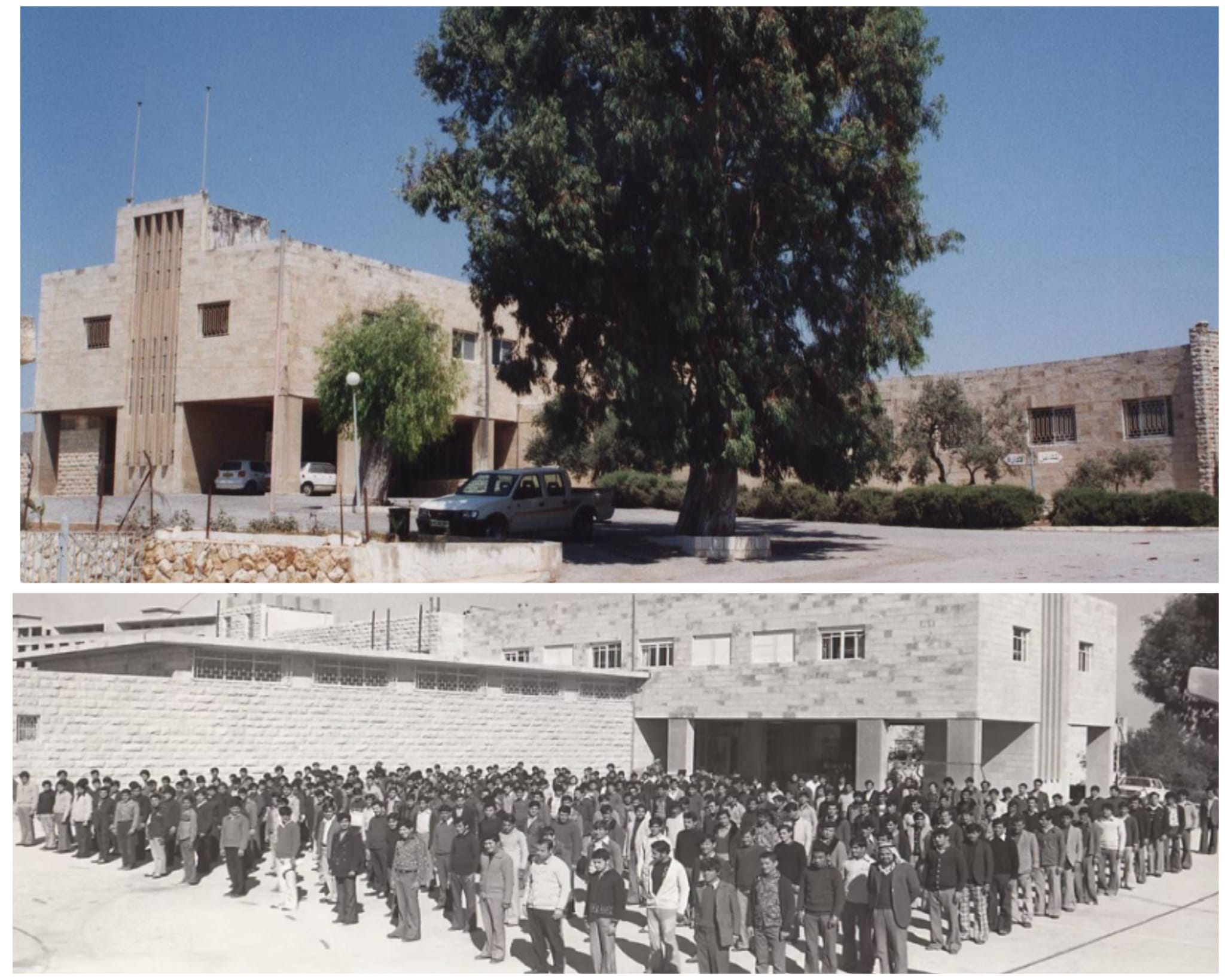
The school, spread over approximately 42 dunams, is located between Beit Hanina and Atarot, on the northern edge of Jerusalem. The large campus includes classroom buildings, advanced workshops, laboratories and sports fields. Over the years, its location has become a point of friction because of its proximity to the Atarot industrial zone and the separation barrier.
What is the story behind this historic Palestinian school in Jerusalem?
The school was originally established in Haifa in 1940 by the Arab Orphan Committee, which included a group of intellectuals and public figures. Its original purpose was to provide shelter, education and vocational training for Palestinian orphans after the Great Arab Revolt of 1936-1939 and the severe economic hardship that followed.
After the 1948 war, the institution was moved to Jerusalem, which was then under Jordanian rule. The current building was inaugurated in the late 1960s in a strategic location in the city’s north, and became one of the leading vocational training centers in the Middle East. The institution focuses on technical and vocational education in auto mechanics and diagnostics, building and industrial electricity, carpentry and furniture design, metalwork and artistic welding, and computers and communications.
Over the years, the school’s funding was based on a combination of Jordanian government support, international aid, mainly from the German government, and private donations. A small part of its funding also came from symbolic tuition fees and income from the school’s workshops, such as carpentry and auto repair work carried out for external clients.
Why is the school in northern Jerusalem at risk of closure?
At its peak in the 1970s and 1980s, the institution housed hundreds of students, sometimes more than 500, who came from across the West Bank, Gaza and Jerusalem. It functioned as a prestigious boarding school whose graduates entered the automotive, electrical and construction industries across the Arab world. Today, the number of students has dropped sharply and stands at only a few dozen, depending on the year and track. The decline stems from bureaucratic difficulties, checkpoints that make it harder for students from Palestinian Authority areas to reach the school, and competition from other educational institutions.
Cuts in external support, together with the high costs of maintaining modern technological workshops, have pushed the institution into deep deficits. The construction of the separation barrier and checkpoints cut the school off from its main target audience, students from the seam zone and Palestinian Authority areas. This led to lower enrollment and a growing sense of isolation around the institution.
There is also ongoing tension over the curriculum, Palestinian versus Israeli. Pressure from the Jerusalem Municipality, through the Jerusalem Education Administration and the Education Ministry, to adapt the institution to the Israeli system as a condition for funding has created internal opposition on ideological grounds. The Jerusalem Education Administration also argues that the institution suffers from aging physical infrastructure and a low number of students that does not justify maintaining such a vast campus. The municipality has more than once expressed interest in “taking over” the management of the institution or converting some of its buildings into regular municipal schools, in order to address the severe classroom shortage in Beit Hanina.
Another major issue in dispute is the land on which the school sits, considered a strategic asset. Long-running legal battles have been held with Israeli authorities and private parties over ownership of parts of the site, with some parties seeking the land for the expansion of the industrial zone or the construction of housing units.
The main claim by the Custodian of Absentee Property and the Israel Land Authority is that parts of the land in the compound belong to Jewish owners who purchased them in the early 20th century, before 1948, and therefore, with the application of Israeli law after the Six-Day War, ownership should return to the state.
After years of hearings, Israeli courts accepted the state’s position in some of the claims. It was ruled that a distinction should be made between the school buildings and open areas within the compound. These rulings paved the way for the advancement of government construction plans on areas that had previously served the institution, such as sports fields or educational agricultural land, narrowing the school’s room to maneuver and threatening its ability to continue operating in its current form.