Several of the first nights of the month of Elul have already passed, and at 12:15 a.m., Jerusalem begins to ask for forgiveness. It is a time of grace and the most fitting moment to offer supplications.
“To plead for my sins. And my soul is darkened by the abundance of my wrongdoing. Have mercy on Your congregation, the flock of Your pasture.” (From the Selichot prayers).
What do Selichot prayers at the Western Wall in Jerusalem look like during Elul?
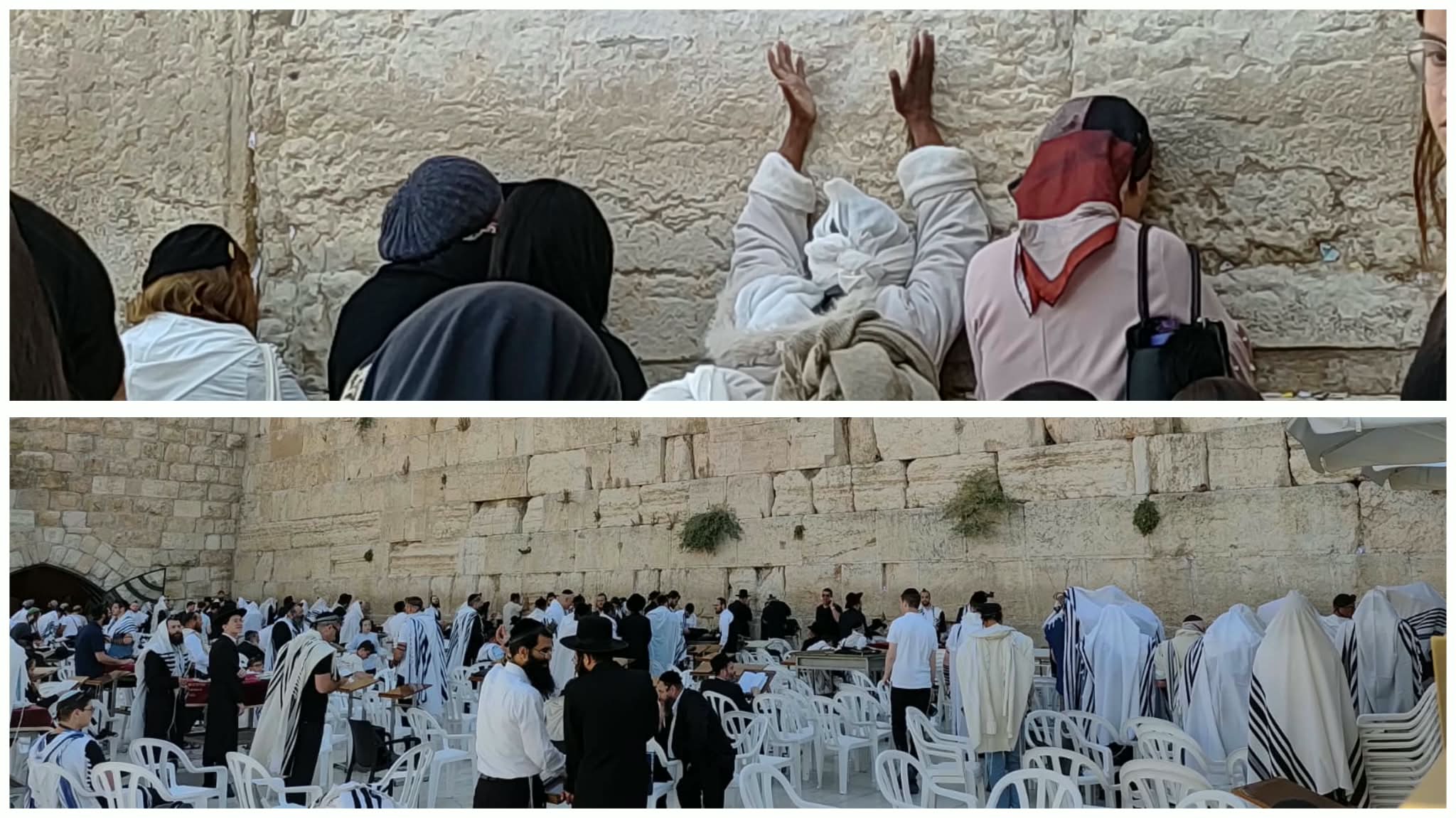
At the hours when the city begins to fall asleep and the extinguishing of the lights deepens the night, the Western Wall plaza in Jerusalem fills with worshippers arriving to recite Selichot. The sounds of prayer are heard and absorbed into the ancient stones of the wall and into the caper bushes where pigeons, as well as swifts and local crows, nest. Above it all hangs the feeling that the days ahead are no longer ordinary days on the calendar.
The month of Elul opens the period of mercy and forgiveness, the weeks before Rosh Hashanah and Yom Kippur. In Jewish tradition, it is a time for self-examination, asking forgiveness and preparing for the High Holidays. But at the Western Wall plaza, the concept of “self-examination” seems to take on a much deeper and more human meaning. A person who comes here does not come only to pray: they arrive carrying a backpack filled with the experiences of an entire year and countless requests for positive changes in life.
The heart does not stop reflecting on successes, disappointments, failures and the future. The stones of the Western Wall, known in Hebrew poetry as stones with a human heart, listen to the prayer of every worshipper praying for health, livelihood, a match, fertility and success. Thoughts wander through prayer toward people who entered their lives and brought blessings with them, and toward others from whom they grew apart. Toward decisions they made and regret, and toward hopes that still remain.
From the Selichot rises the same ancient plea, spoken just as it was a year ago:
“Forgive us, our Father, for we have sinned.”
“Out of the depths I called You, Lord.”
How many worshippers come to Selichot at the Western Wall in Jerusalem each midnight?
Without any special invitation, hundreds of worshippers arrive at this holy place around midnight, from every form of settlement in Israel, from every level of faith and religious observance, from every community and every layer of society. This is the place where everyone is equal. The Western Wall, the sole remnant of the Temple from the late Second Temple period, a retaining wall adjoining the Temple Mount, receives everyone in its eternity. There will be no urban renewal project here and no national planning changes. Only maintenance work and further archaeological excavations.
Into this almost cosmic world come people who differ from one another in their lifestyles, ages and the stories they carry with them. They stand before the stones, pray and connect with the generations that came before them, with their ancestors and with the generations that will follow. They all speak the same language of supplication, woven into the history of the Jewish people.
And if there is doubt that forgiveness will reach a person, there is a special request – if not for my sake, then:
“Do it for the sake of Abraham, Isaac and Jacob. Do it for the sake of Moses and Aaron, do it for the sake of Zion, the dwelling place of Your glory, do it for the sake of the destruction of Your House, do it for the sake of the desolation of Your sanctuary…..”
And the following morning, silence rules the plaza. The prayers of the night are still in the air. Only the shofar, which has also been taken out of the prayer leader’s drawer, gives everyone a brief reminder of the opening of the gates of heaven.