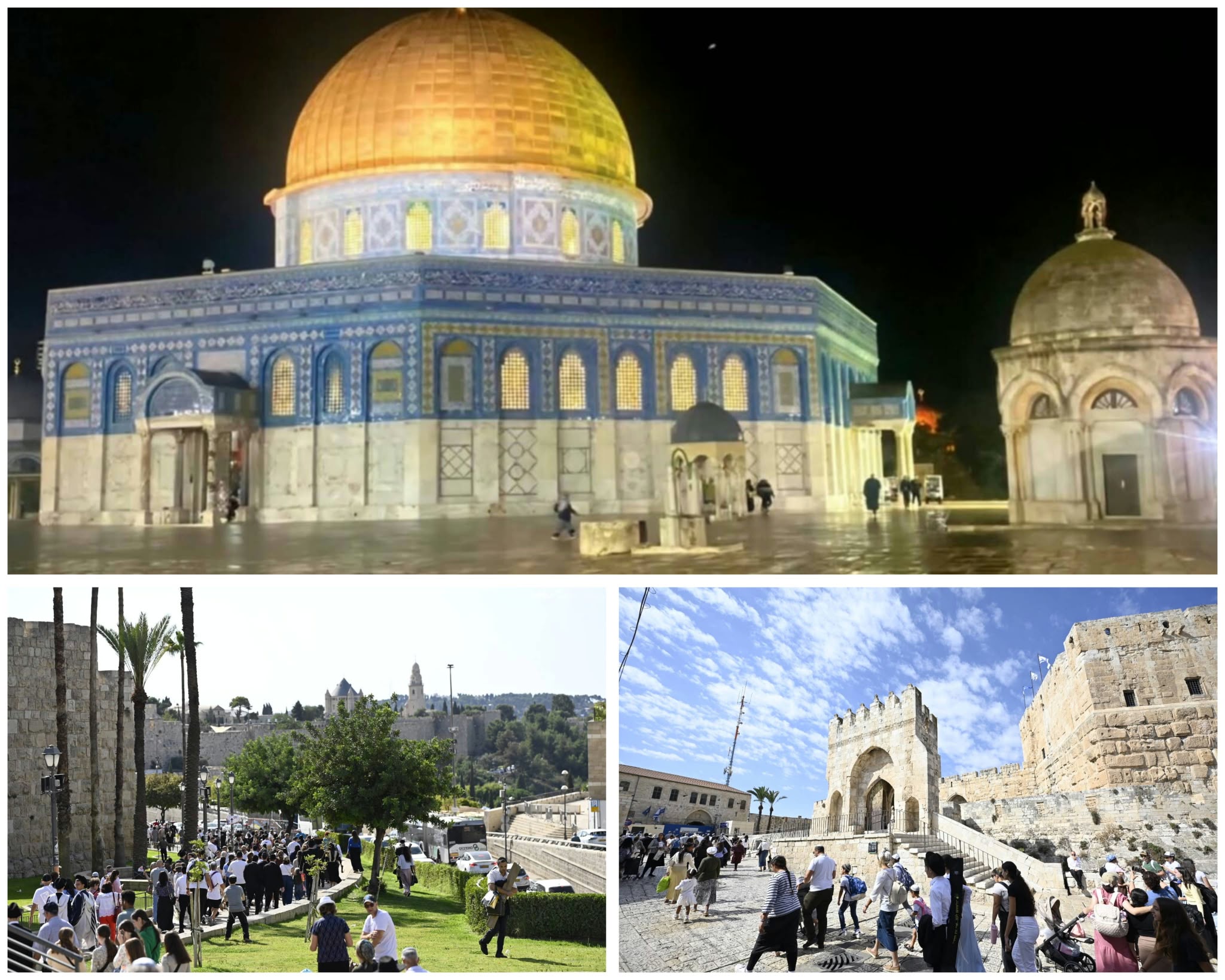
This year’s Sukkot holiday was marked by a significant increase in the number of Jewish visitors ascending the Temple Mount in Jerusalem, alongside a continued expansion of visible Jewish worship at the compound. Despite the formal ban, several dozen visitors managed to perform the mitzvah of the Four Species using items smuggled into the site, while opening hours were extended due to the heavy crowds. On the Palestinian side, despite recurring protests over the “Judaization” of Al-Aqsa Mosque, calm was maintained.
An all-time record in the number of Jewish visitors to the Temple Mount was recorded during the intermediate days of Sukkot: thousands of visitors filled the compound, openly and publicly holding holiday prayers, singing, dancing and prostrating. Among those who ascended were ministers, members of Knesset, rabbis and heads of yeshivas.
How Many Jews Ascended the Temple Mount During Sukkot 2026?
The organizations that document visits to the Temple Mount presented different estimates for the total number of visitors during the holiday, but all point to an unprecedented increase. According to data from the Temple Mount Administration, 8,690 Jews ascended the compound for prayers and tours during the intermediate days of the holiday, an impressive increase of about 19% compared with the corresponding period last year. The Muslim Waqf administration estimates that 9,138 people ascended the compound. A similar estimate was published by the “Beyadenu – Returning to the Temple Mount” organization, according to which the total number of visitors during the holiday reached 9,172 Jews, reflecting an increase of about 22.7% compared with Sukkot last year. To illustrate the enormous growth over the years, a decade ago the number of visitors during the holiday stood at just 1,611.
Visible expressions of Jewish worship also increased in 2026: thousands of visitors held holiday prayers at the site, including Shacharit, Hallel, Hoshanot, Musaf and Mincha. Many brought prayer books and holiday prayer books with them, an act that until recently would have resulted in immediate removal from the Mount, whereas it is now carried out openly. Singing, dancing and the waving of Israeli flags were also recorded.
At the same time, the official ban on bringing the Four Species onto the Temple Mount remained in effect, but several groups, together numbering dozens of visitors, managed here and there to bring in lulavs and miniature sets in various ways. The Four Species were passed from hand to hand at the site in order to perform the mitzvah. According to reports, about 15 people who were caught holding the Four Species were removed from the compound.
On the Palestinian side, the visits were covered extensively, accompanied by protests over the “Judaization” of Al-Aqsa Mosque, but the holiday passed in complete calm, without disturbances or direct friction with Palestinian residents or the Waqf. The calm was maintained after the Jerusalem District Police carried out preliminary activity and removed from the Mount in advance activists known for inciting disturbances. Rabbi Shimshon Elboim, head of the Temple Mount Administration, was therefore able to sum up the holiday: “Congratulations to the thousands of visitors, already approaching ten thousand. Israel’s return to the Temple Mount continues to grow stronger.”