The ongoing confrontations surrounding the Hinnom Valley (Wadi Rababa) in southern Jerusalem have reached a new peak in recent days: the olive harvest season has become yet another flashpoint in the continuing dispute over the basin, which lies along the ravine separating the Abu Tor neighborhood from Silwan and the southern slope of Mount Zion, south of the Old City, and has become one of the city’s main areas of contention.
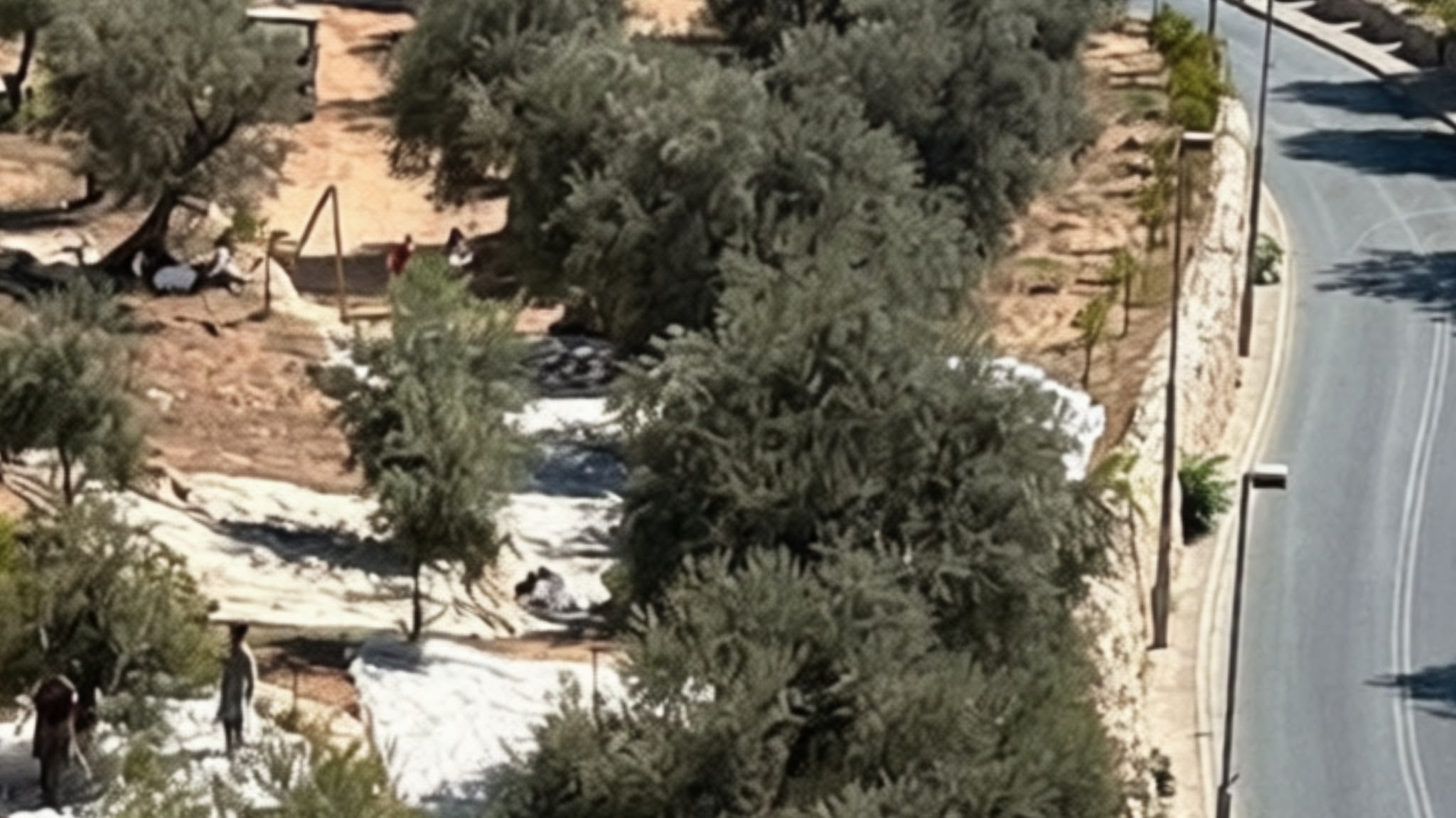
In recent days, Israel Nature and Parks Authority inspectors, accompanied by police forces, confronted members of the Abbasi and Samarin families, residents of Silwan, during the annual olive harvest. Inspectors confiscated the harvest and agricultural equipment and halted further work at the site, a move that has reignited the deep legal and political dispute over control and development of the area.
Who Owns the Land in Jerusalem’s Hinnom Valley?
The roots of the dispute lie in the land’s complex dual legal status. On the one hand, the area was designated as part of the “Jerusalem Walls National Park” as early as 1974, giving the authorities planning powers to manage and preserve it. On the other hand, most of the land in the wadi is privately owned property historically belonging to residents of the Palestinian neighborhoods or religious institutions. The dispute has intensified in recent years after authorities began implementing “gardening orders” in the area, a legal mechanism that allows the state to take temporary possession of open land and develop it for public use.
Israeli authorities, including the Jerusalem Municipality, the Israel Nature and Parks Authority and the Elad organization, which operates the site, maintain that the Hinnom Valley is a landscape, archaeological and historical asset of major national and international importance. Enforcement officials stress that the “gardening orders” do not alter the formal ownership of the land, but rather constitute a legal tool for maintaining open public spaces.
According to the authorities, the purpose of the supervision and development activities is to restore the ancient terraces, prevent waste dumping and illegal construction, and open the area to the general public. The authorities say that enforcement is carried out strictly in accordance with the law and within the national park’s status quo. Tourism and educational projects operate at the site, including the “Farm in the Valley” and the suspension bridge, which, according to the state’s position, are intended to make heritage sites more accessible, improve visitors’ safety and revive ancient agricultural crafts.
By contrast, among Palestinians, including members of the Abbasi and Samarin families, the situation is perceived as a systematic and sophisticated dispossession of their private land. Family representatives stress that their connection to the olive trees in the wadi is historic and multigenerational, and that the land is legally owned by them. They argue that the confiscation of agricultural equipment and the halting of the harvest are intended to directly undermine their connection to the land and prevent them from exercising their basic right to reap the fruits of their labor.
Left-wing organizations accompanying the residents, such as Peace Now and Emek Shaveh, support this position and argue that the authorities are using the green mantle of “nature conservation” to advance a political agenda serving settler organizations. They claim that the ultimate goal of these projects is to create Israeli territorial continuity around the Old City while pushing the Palestinian presence out of the area. The current confrontation demonstrates that in Jerusalem, even a traditional olive harvest is an inseparable part of the struggle over sovereignty.