In the early morning hours, before Jerusalem fully wakes up, its heartbeat begins at Bar-Ilan Junction. Buses rush in every direction, pupils head to school, yeshiva students to their study halls, students to Mount Scopus, residents to work across the city, and customers to the shops packed into the dense commercial area.
At this Jerusalem junction, one can buy fish for Shabbat, textbooks, medicine, electrical appliances, pastries, and almost anything else. Before boarding buses that reach nearly every destination, one can leave shoes with the cobbler or clothing for repair with the tailor. Bar-Ilan Junction is not just another road crossing. It is a small city inside the larger city.
Why Bar-Ilan, of All Places?
A great deal of creative and meaningful thought seems to have gone into choosing this location for protest – the area where ultra-Orthodox demonstrators opposing the draft law and the arrest of draft evaders impose new rules of life that affect all of Jerusalem’s main arteries. “We will die and not enlist,” the slogan of the ultra-Orthodox protest, echoes an opposite slogan: “It is good to die for our country.”
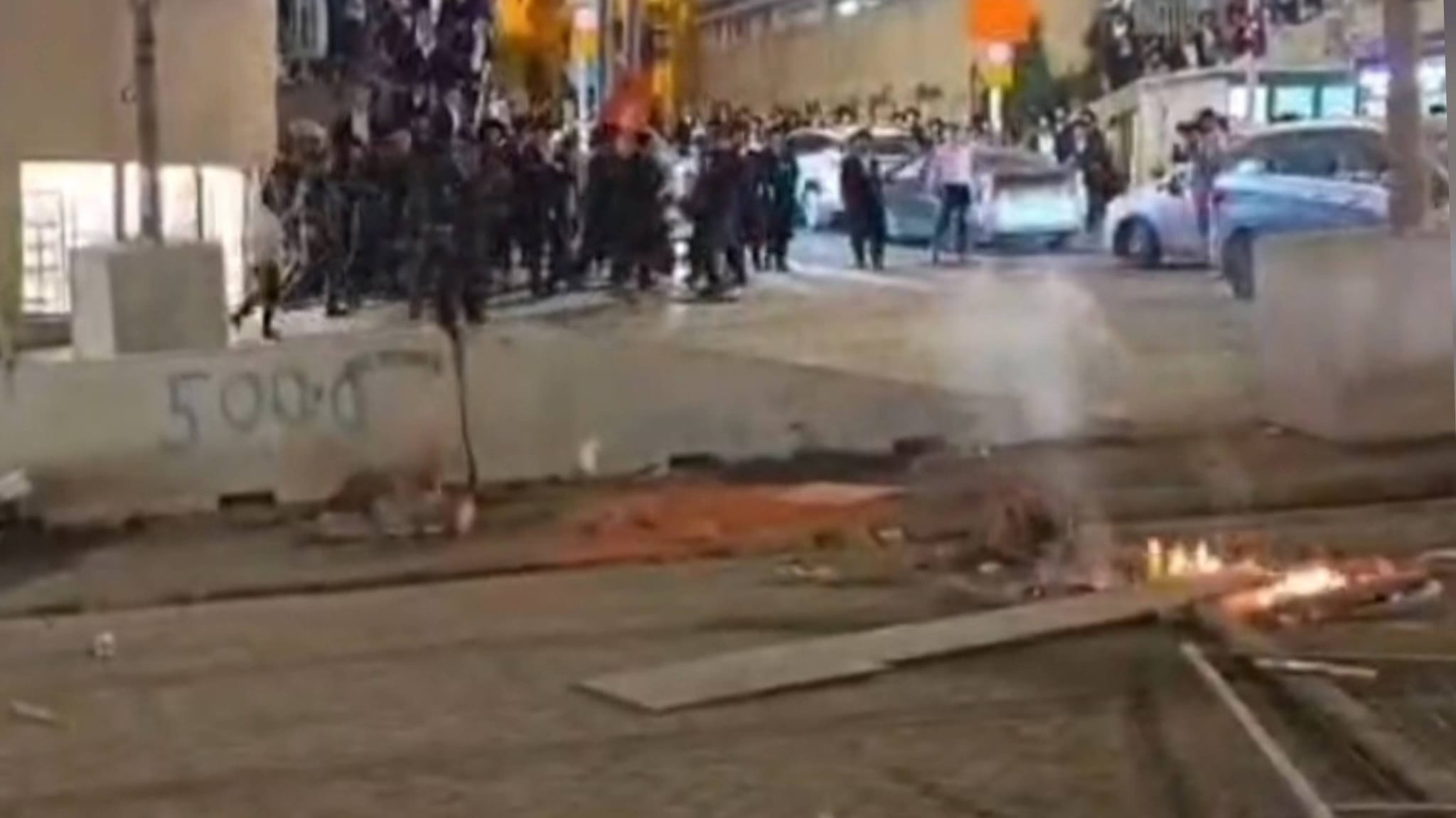
During a demonstration, the river of buses and crowds gives way to a black blanket of hundreds of yeshiva students and protesters spread across the road. Facing them are Jerusalem District police officers, horses and a water cannon. The chants, screams and announcements stop the routine of the day. The junction, which usually connects different parts of Jerusalem, becomes a charged arena where protest and authority meet over control of the public space.
What Made Bar-Ilan an Ultra-Orthodox Power Arena?
Here lies the explanation for how Bar-Ilan Junction became, over the years, a central protest hub for the Jerusalem Faction and additional ultra-Orthodox streams. This is the protesters’ parliament. This is where things are decided. At times, blood may even be shed in protests against conscription, in demands to release arrested draft evaders, or in opposition to infrastructure work for the light rail, but the end is seen as justifying the means.
The ultra-Orthodox protesters did not choose Bar-Ilan Junction by chance. The junction connects the neighborhoods of Shmuel HaNavi, Ramat Eshkol and Ma’alot Dafna. Nearby are Sanhedria, Ramat Shlomo, Ramot, Highway 443, Geula, Mekor Baruch, the Central Bus Station and Highway 1. This is one of the most significant power points in Jerusalem.
Blocking Bar-Ilan is like pressing on a central artery in the human body: all of Jerusalem feels the distress. Drivers, passengers, shopkeepers, pupils and passersby immediately become part of the event. There is also an interesting historical irony here: the street and the junction are named after Meir Bar-Ilan, one of the leaders of religious Zionism and of the Mizrachi movement. The very junction named after a man who connected the world of Torah with public action has, over the years, become one of the stormiest arenas in the battles over religion, state and military service.
Bar-Ilan continues, even now, to paralyze Jerusalem. Perhaps even a funeral, heaven forbid, leaving the nearby funeral home, may be delayed and delay the dignity of the deceased and the family. Some places are not marked only on the map. They are marked on the pulse and blood pressure of a place. One problematic junction, and an entire city needs an emergency button and assistance before the coming typhoon.