Summer 2026, and the grapes arriving at Jerusalem’s Mahane Yehuda Market look like a seasonal jewel for anyone still able to treat themselves despite the cost of living.
From the light rail crossing the city from east to west, all the way to Mount Herzl and toward Hadassah Ein Kerem, residents of Pisgat Ze’ev, Gilo, Neve Yaakov and Kiryat Hayovel get off one after another to buy again what has already disappeared from the house after the recent holiday. Market carts and shopping bags are ready to take in the best seasonal vegetables and fruit, while the bill is already running through shoppers’ minds even before the first purchase.
Many will fill their basket with a quarter of a watermelon, a few lemons, green beans, apricots and loquats, and perhaps a small box of strawberries for the grandchildren. Shoppers will pass by the grapes with a quick, almost apologetic glance. Most of the grapes will remain on the stand until the late evening hours, when their price finally drops.
How did grapes become a luxury fruit in Jerusalem?
The most Israeli fruit of the summer, one of the Seven Species with which the Land of Israel was blessed, has become a symbol of luxury. The school breakfast of Israeli children will, in most cases, not include grapes, the refreshing, round and sweetest of fruits. Most of them will not have grapes in their bag simply because grapes have become expensive.
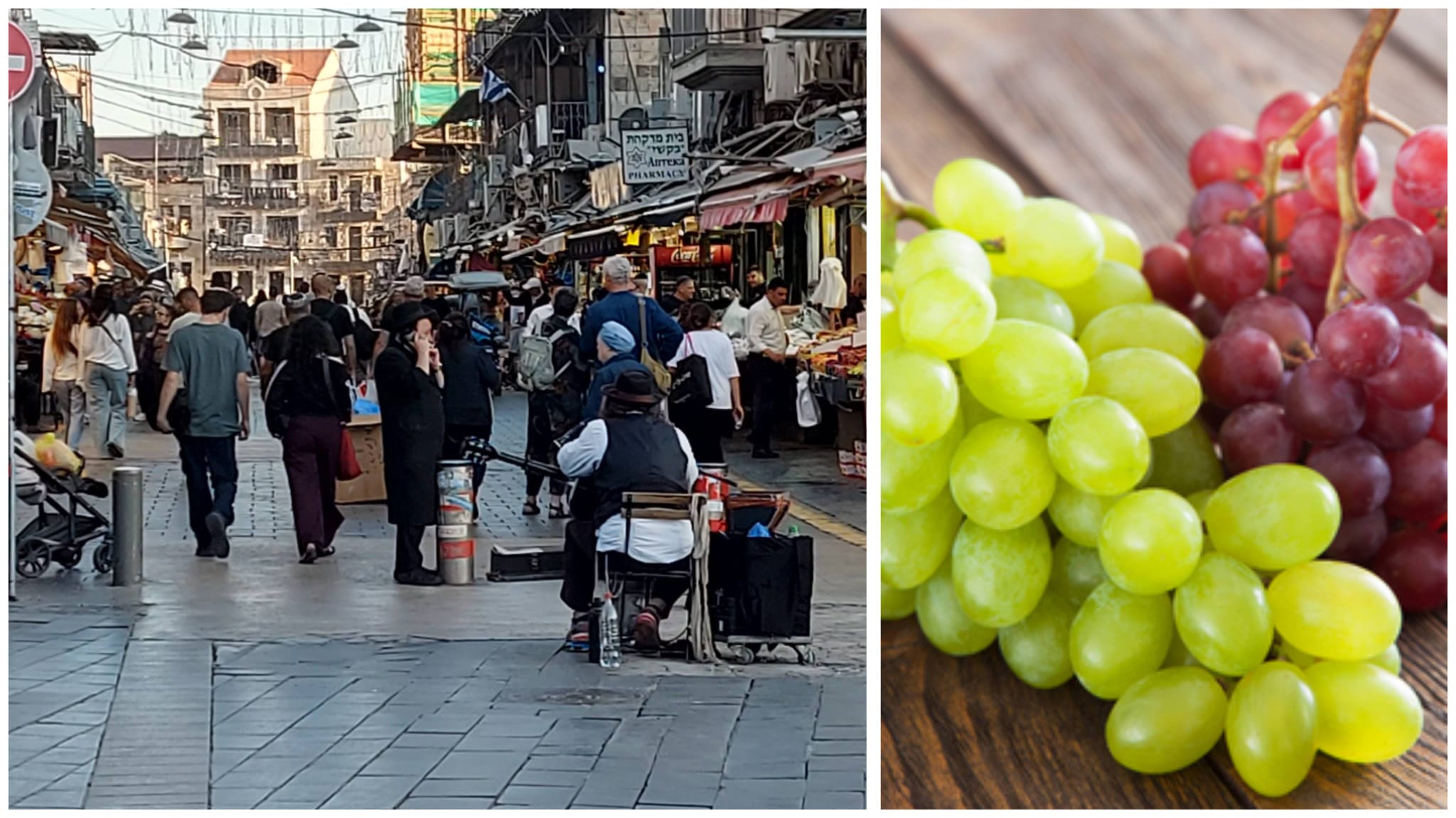
Already in the early morning at Mahane Yehuda Market, just before the Jerusalem heat descends on HaTapuach Street, Etz Chaim Street, HaAgas Street and the nearby alleys, transparent grape packages catch the eye as if they were treasures in a shop window. The green and black grapes are covered with a fresh mist, their perfection revealing a sweet memory of summer. Not long ago, they were harvested in vineyards and fields by hardworking farmers who love the land. But the sign showing their price quickly stops the excitement.
Green grapes are being sold this year for 18 to 35 shekels per kilo. Black grapes are already climbing to 25 to 40 shekels per kilo. They are packed in transparent half-kilo to one-kilo boxes, neat, shiny, almost sterile. There are no free tastings, and no one dares to pluck one. In the past, people would touch, taste and finish off a small cluster while shopping. Today, grapes have become like sacred candles, only to be looked at. Shoppers glance at the price and move on.
Where did Jerusalem’s backyard grapevines go?
The sight that was once part of the Jerusalem landscape, grapevines in the courtyards of homes, has almost disappeared as well. The balcony, the garden and the corner where one could breathe easily in the evening have been enclosed into another room, while the grape arbor and the green, juicy pergola are also on their way to extinction.
The grapes that once symbolized summer, freedom, generosity and abundance in the Jerusalem orchard now represent the cost of living and the upheaval that Israel in general, and Jerusalem in particular, has been going through for several years. A bowl of washed grapes on the table, once taken for granted, has become an economic decision. The abundance of grapes that flooded Jerusalem homes a generation ago brought out juicers and inspired original squeezing methods to fill glasses with cold grape juice for the family.
“… A grapevine matched with a grapevine is a fine and fitting thing …,” Hasidim sing at engagements and weddings, quoting Tractate Pesachim, 49a. And perhaps this is the disappointing punchline of summer 2026 in the capital of the land promised a life of “each man under his vine and under his fig tree.” Even the vine has become a premium product.