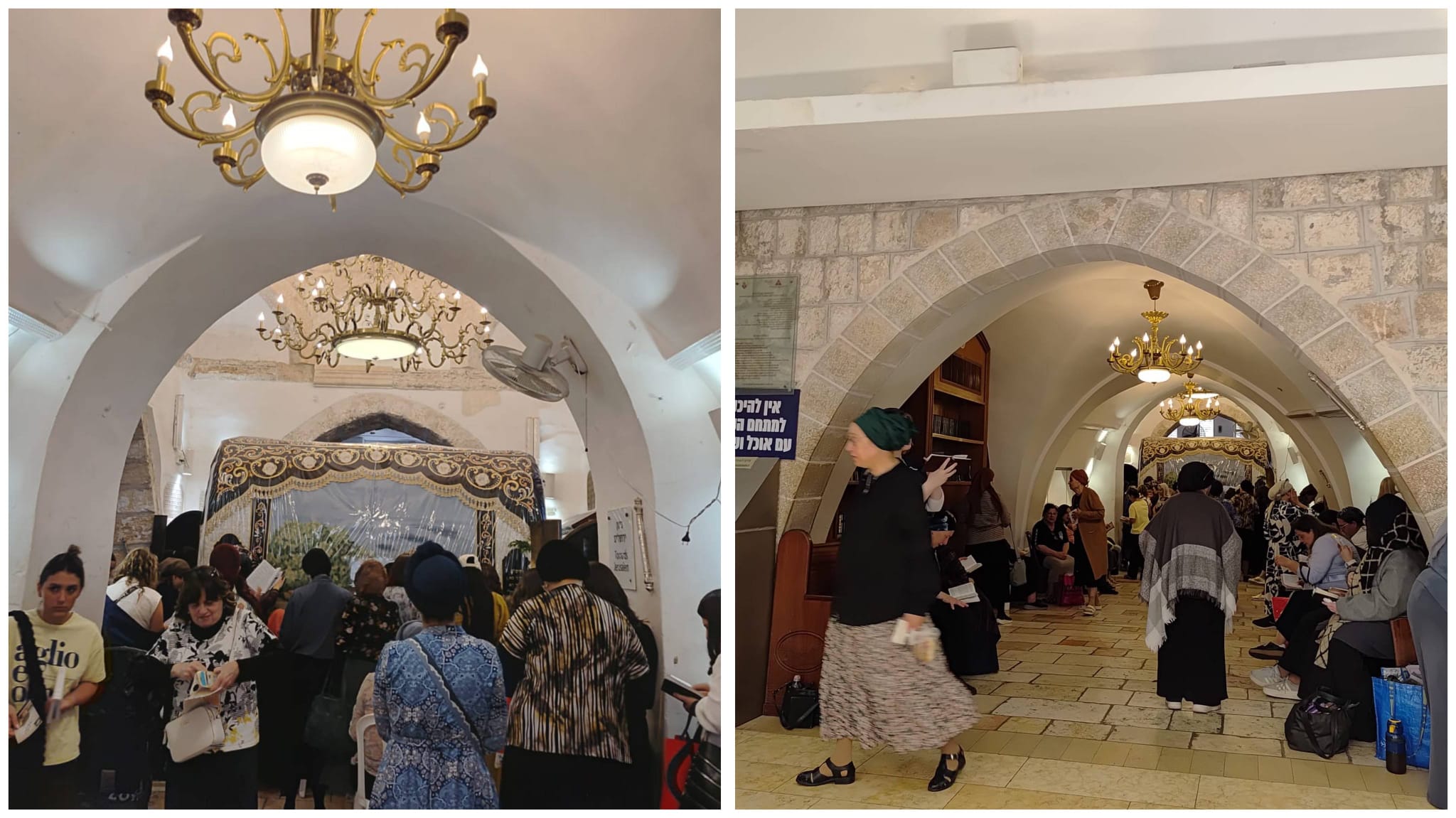
After the wars, the fears, the pauses in visits and prayers, Rachel’s Tomb near Jerusalem has undergone renovation and is now once again receiving the people of Israel and their pleas.
Bus 163, departing from Jerusalem’s Central Bus Station, takes a long route and gathers more and more passengers along the city’s streets. It is a journey that stirs thoughts, quiets worries and awakens hopes. Of course, this is not the road by which Rachel reached the fields of Bethlehem, where she died. It is a ride through Jerusalem, where one begins to understand life’s tricks and designs.
An Arab driver carries a bus full of women, young couples, religious and secular passengers, not to Hagar’s grave, but to the burial place of Rachel our Matriarch. Most passengers hold a Book of Psalms, a small note folded tightly in a pocket and a vision that everything will change for the better. The security reality, regional tension and recent wars slowed the flow of visitors. The concerns grew, the protection was not enough, and many preferred to pray at home, or perhaps to visit and pray at Benjamin’s Tomb in the heart of Jerusalem, the brother of Joseph and Rachel’s son.
What does the new renovation at Rachel’s Tomb include?
Over the past year, the Rachel’s Tomb compound has undergone a significant facelift. The parking area was expanded, the entrance was reorganized, a new traffic circle was built, access paths were improved and the site is gradually being adapted for people with disabilities. Protected shelters and additional security components were also installed. In this way, the holy place has become safer and more accessible for its worshippers.
But the real story is not only the renovation. It lies in Rachel herself. The rare story of Jacob’s wife combines history, longing, prayer and faith.
Rachel, Leah’s younger sister, holds a unique place in Jewish tradition. Unlike the other patriarchs and matriarchs, who are buried in the Cave of the Patriarchs, she remained alone on the road to Ephrath. The sages saw this as a mission for generations: to be there for the sons and daughters passing along the roads, for the exiles, the returnees and those seeking comfort. For thousands of years, her tomb has become a place of prayer where pain can be released before the mother who, more than anything, symbolizes listening and compassion.
Why does Rachel’s Tomb still move people in 2026?
Precisely in 2026, as Israel and its capital Jerusalem are still dealing with the consequences of the recent wars and a complex security reality, the bond with Rachel seems to take on new meaning. It is no longer only a historical site, but a place that tells a story about the ability to rebuild, even after periods of destruction, disconnection and the noise of war.
The upgraded protection and renovation of the place in honor of the mother whom the prophet Jeremiah elevated into a national symbol are not only an investment in infrastructure. They are testimony that history continues to be heard and to beat within the stones of the present.
And still, those verses remain alive in an age of technology and security challenges:
“Thus said the Lord: A voice is heard in Ramah, lamentation and bitter weeping; Rachel weeping for her children; she refuses to be comforted for her children, because they are not.” (Jeremiah 31:14)
“Restrain your voice from weeping, and your eyes from tears; for there is reward for your work, says the Lord, and they shall return from the land of the enemy. And there is hope for your future, says the Lord; and your children shall return to their own border.” (Jeremiah 31:15)
To this place, believers, women and men, come through Jerusalem in order to mend feelings and strengthen the hope for a happier life, free of crisis.