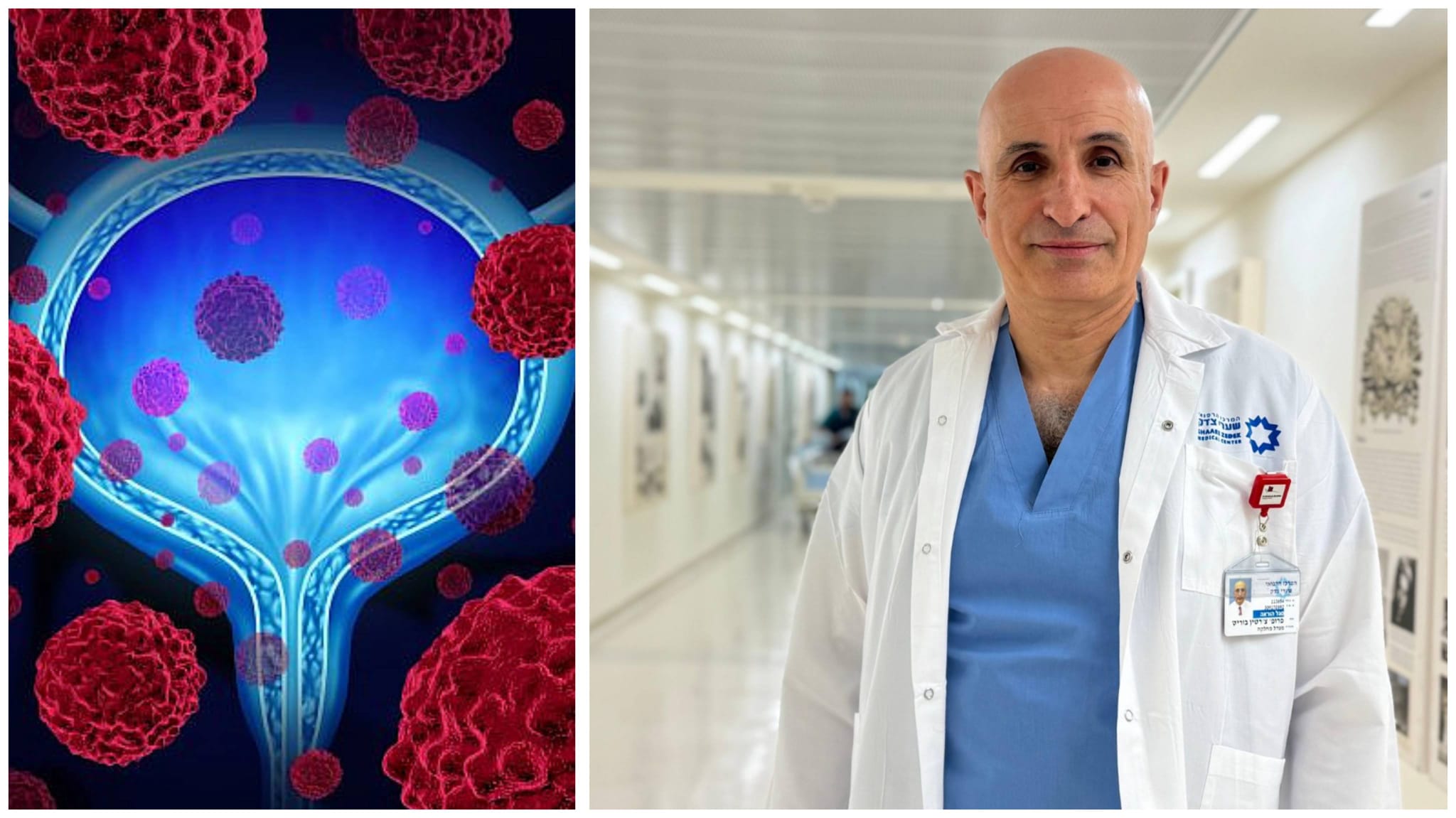
An international study led by the Urology Department at Shaare Zedek Medical Center has reported particularly encouraging results in patients with high-risk bladder cancer that has not yet invaded the muscle layer.
The new treatment is designed to stop the disease from progressing and spare patients from undergoing a complex operation to remove the bladder.
According to the results recorded after one year of follow-up, approximately 95% of the patients achieved a complete response, with the tumor disappearing within three months. After one year, 76% remained free of detectable disease in the bladder.
Among the most challenging group – patients whose cancer no longer responded to the standard treatment and who faced the possibility of bladder removal – 80% achieved a complete response after one year. None of the participants experienced progression to invasive cancer during the study, and no patient required bladder-removal surgery.
How does the new bladder cancer treatment work?
The study examined a treatment based on a biodegradable polymer gel that is inserted directly into the bladder. The gel creates a local drug reservoir that continuously and gradually releases a combination of two chemotherapy drugs over 14 days.
The method is intended to extend the tumor’s exposure to the active substances and replace more complicated treatment procedures that require special pharmaceutical preparation and frequent, exhausting clinic visits.
What did the Jerusalem researcher leading the study note?
Prof. Boris Chertin, director of the Urology and Pediatric Urology Department at Shaare Zedek and the study’s lead researcher, noted: “This is a genuine breakthrough and a fundamental change in the treatment approach for bladder cancer patients around the world. Until now, high-risk patients who did not respond to conventional treatments were forced to undergo complex bladder-removal operations that severely damaged their quality of life.”
He added: “The new technology allows us to deliver chemotherapy directly to the tumor in a prolonged, safe and remarkably effective manner, while preserving the patient’s quality of life. The fact that all the patients in the study avoided bladder removal and their disease did not progress is an enormous achievement.”
Did the new treatment cause serious side effects?
According to the study data, no serious side effects were recorded. The local side effects were mild and included temporary burning during urination. Every participant completed the full course of treatment, with no withdrawals from the study.
The findings were presented at the annual meeting of the American Urological Association. Following the success of the current stage, the developer is preparing large-scale Phase 3 trials aimed at examining the treatment as a possible new global standard of care.