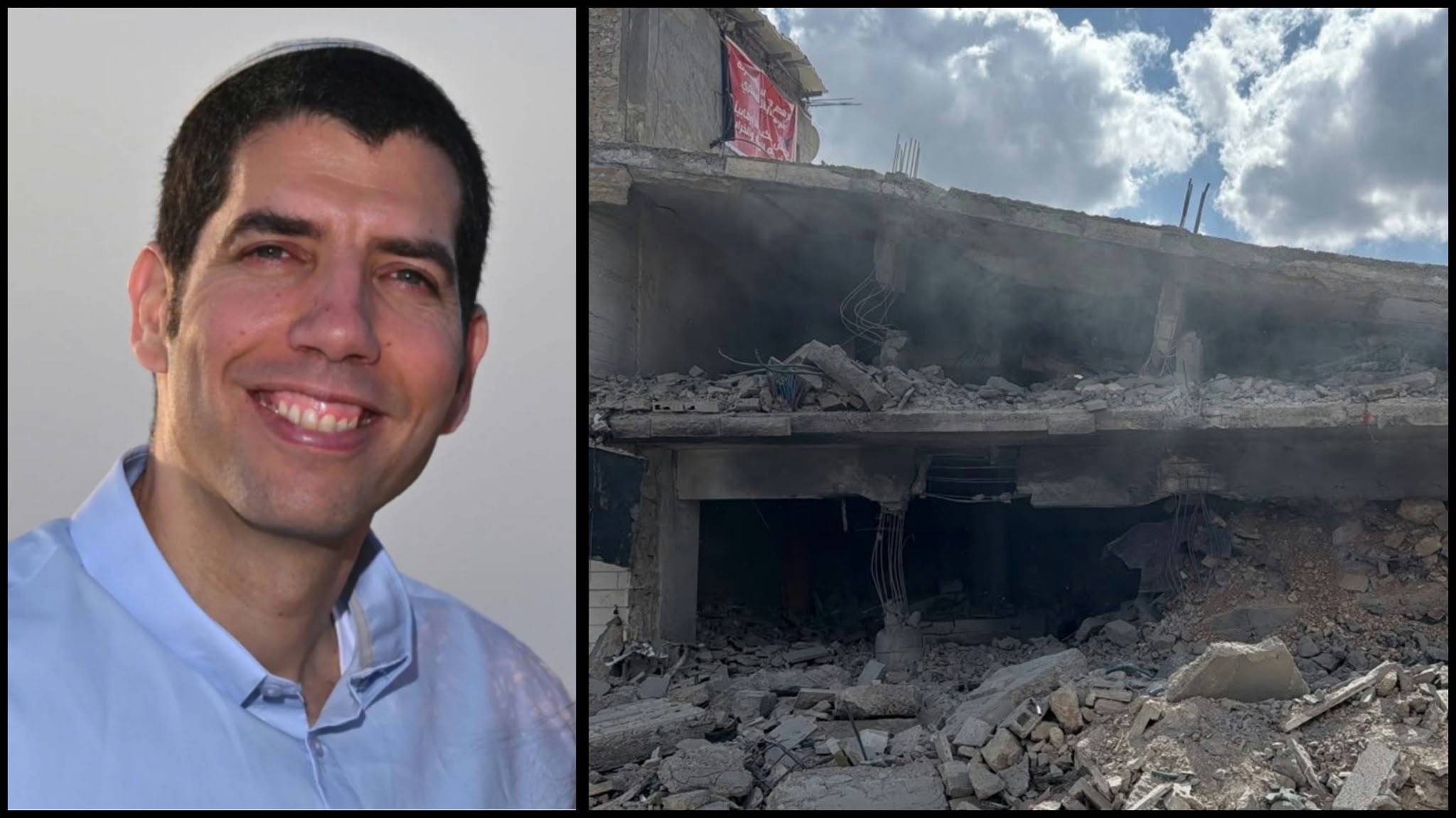
A powerful explosion that shook communities in northwestern Jerusalem and the Givat Ze’ev area on Wednesday morning marked the demolition of the home in Biddu of terrorist Kadri Samara, who murdered Nataniel-Yehonatan Shakron, of blessed memory. The blast once again placed the demand to impose the death penalty on the terrorist at the center of public debate, for the first time since Israel’s death penalty law for terrorists came into force in March 2026.
Could the demolition of the terrorist’s home in Biddu become the first test of Israel’s death penalty law?
The deadly attack that preceded the demolition took place on September 20, 2026, on the eve of Yom Kippur. Nataniel (Nati) Shakron, of blessed memory, a 48-year-old resident of Alei Zahav, an insurance company employee and father of six, arrived that morning with his eldest son to immerse in the Ein Raya spring near Neve Tzuf. The terrorist, Kadri Samara, a Hamas operative from the town of Biddu, northwest of Jerusalem, had surveyed the site a day earlier. He ambushed the bathers and opened deadly fire at close range. Shakron was murdered at the scene, while his son survived thanks to his father, who warned him at the last moment. Samara fled after being wounded by a soldier’s gunfire, and following a dramatic manhunt lasting several hours, he was arrested by soldiers from the Duvdevan Unit at a hospital in Ramallah. He is now awaiting trial.
The geographical proximity of the terrorist’s home in Biddu to Jerusalem, and the fact that the shockwave from the demolition was heard within the capital and nearby communities, intensified calls by bereaved families and elected officials, led by National Security Minister Itamar Ben-Gvir, to toughen deterrent measures. Supporters of such measures argue that home demolitions alone are insufficient to prevent the next attack, particularly when terrorists operate only minutes away from major population centers.
Against this background, demands are growing to implement the death penalty for terrorists. The relevant legislation, the “Death Penalty for Terrorists Law, 5786-2026,” which came into force in March this year, stipulates that a terrorist who carries out a murderous act of terrorism will be sentenced to death. The law amends the Order Regarding Security Provisions in Judea and Samaria and authorizes military courts to impose the death penalty, by hanging, even without a request from the prosecution or a unanimous decision, while abolishing the authority to commute or reduce the sentence.
Now, as the demolition in Biddu leaves the terrorist’s home in ruins, one question remains: will this become the first case in which the courts are asked to impose the death penalty on the terrorist, thereby creating a new legal and deterrent precedent in Israel’s fight against terrorism?