As part of the “waste to gold” revolution led in recent years by Israel’s Ministry of Environmental Protection, an advanced and accelerated plan is now underway to establish a “waste-to-energy facility for the Jerusalem metropolitan area.” The facility is expected to be built in northern Jerusalem, in the Atarot area and on lands belonging to the town of Qalandiya. The project is being promoted as part of Israel’s national strategy to move from polluting landfill disposal to a circular economy, in line with European standards.
The plan is one of the most complex and explosive environmental infrastructure projects in Jerusalem in recent years. Its goal is to drastically reduce landfill use in Israel and generate electricity from waste, but the project is also facing strong opposition for environmental, planning and political reasons.
Why is the waste facility in northern Jerusalem facing opposition?
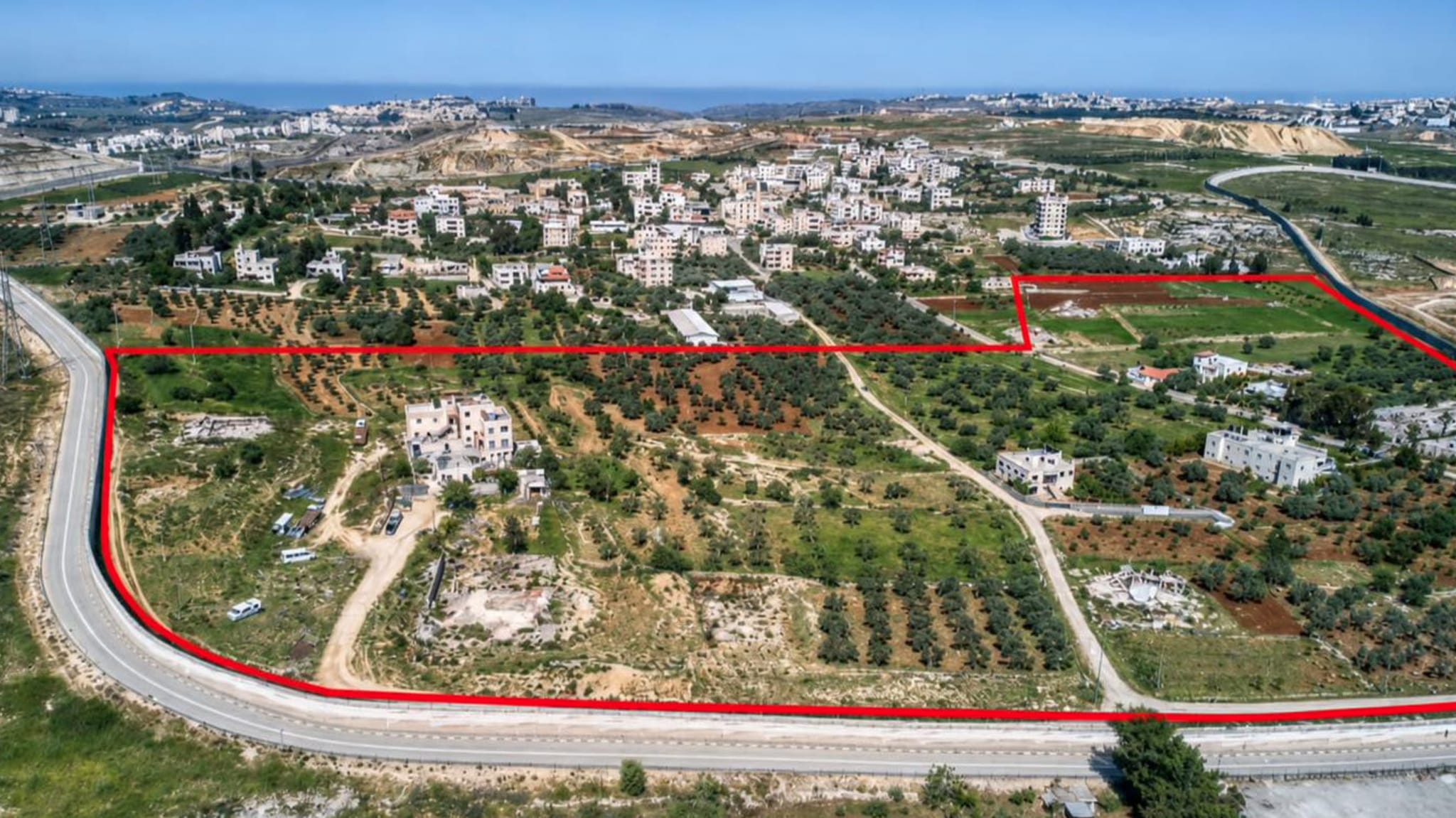
The plan was launched in June 2024, when the municipal company Eden was tasked with locating a suitable site in the Jerusalem area. In April 2025, Finance Minister Bezalel Smotrich signed orders activating historic expropriation measures to prepare 130 dunams of land, alongside government approval to examine moving the route of the separation barrier in order to place the facility under full Israeli management and security control.
However, in recent months it has become clear that the original area is not sufficient. The need for wide access roads for hundreds of trucks every day, the construction of an Israel Electric Corporation substation and IDF requirements for clear security strips have expanded the area affected by the project to about 180 to 200 dunams, including the expropriation of private olive groves belonging to residents of Qalandiya and A-Ram.
While the Ministry of Environmental Protection and the Jerusalem Municipality are promoting the project as a “vital green project” that will prevent pollution and reduce truck transport, opposition on the ground is growing. Independent environmental organizations support the technology, but oppose the location; according to them, northern Jerusalem already suffers from an “excessive environmental burden” of polluting industries, and it is unjust to place a huge incineration facility on a weakened population.
On the Palestinian side, this is seen as a sharp political and property-rights issue. They claim the project eats into private tabu-registered lands, threatens to evacuate seven residential buildings housing about 40 families, approximately 80 to 120 people, and aims to cut off Palestinian urban continuity while connecting Atarot to Qalandiya refugee camp as part of creeping annexation.
The legal and public struggle is expected to accompany the construction stages in the coming years.