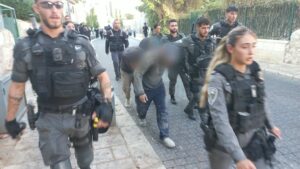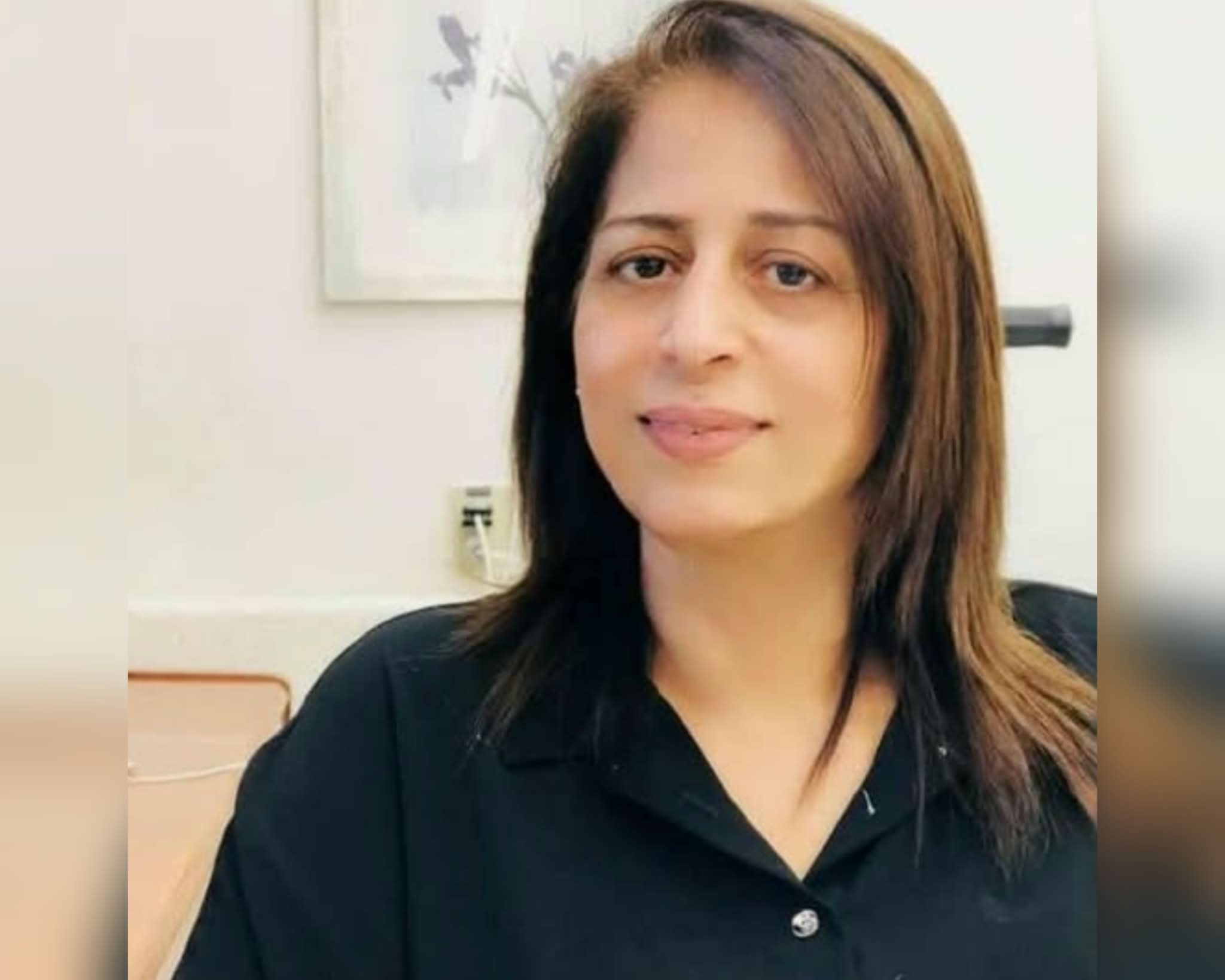
On Sunday this week, September 20, 2026, on the eve of Yom Kippur, an administrative order barring Salwa Abu Labada, a veteran and well-known Palestinian journalist, from the Temple Mount and Al-Aqsa Mosque was issued after she was summoned for questioning at the David Precinct headquarters of the Jerusalem District Police, at the Kishle police station in the Old City. The move has generated considerable attention on Palestinian social media, particularly given the surprising fact that Abu Labada has not physically set foot in the Temple Mount compound for seven years.
An analysis of her recent online posts reveals a hard-line messaging approach consistent with the official narrative of the Palestinian Authority: in recent months, she has focused extensively on the issue of sovereignty in Jerusalem, developments on the Temple Mount, the commemoration and glorification of shahids, and stories involving the families of security prisoners.
In recent days, she addressed a petition filed with Israel’s High Court of Justice seeking to allow Jewish visits to the Temple Mount on Saturdays and during the Tishrei holiday period. Abu Labada referred in her posts to reports about National Security Minister Itamar Ben-Gvir’s supportive position on the petition, even though it had not yet been formally presented before the court – and described his position as support for settlers’ “invasions” of the Al-Aqsa compound on Saturdays. Abu Labada describes routine patrols carried out by Temple Mount police officers in the compound as “break-ins” into prayer halls.
These and similar posts define the legal battle and the issue of Jewish visits to the Temple Mount as “assaults and invasions” and a “desecration” of the Muslim holy site, portraying them as part of a broad and planned Israeli conspiracy to change the religious and historical status quo in order to impose a temporal and spatial division of the compound. The posts are accompanied by religious and nationalist calls to defend the holy site, and in the view of Israeli security agencies, this portrayal, which presents an allegedly immediate and existential threat to Al-Aqsa Mosque, is interpreted as clear incitement and direct encouragement of public disorder, since it is allegedly intended to inflame tensions and prompt young Palestinians to take part in violent protest actions in the streets.
Who is Salwa Abu Labada and what is behind the Temple Mount ban?
Abu Labada, born in 1966 and a resident of the Shuafat refugee camp in East Jerusalem, is a well-known figure in Palestinian and international media. She began her career in print journalism, underwent professional training with a German television network, and later became a presenter, documentarian, director and manager at the official Palestinian broadcasting authority. Her media and documentary work also earned her a place in the BBC’s global list of “100 influential and promising women” in 2013.
In 2019, her life took a dramatic turn when she suffered a severe stroke. Following the event, she became wheelchair-bound – a complex medical condition that prevented her from continuing to work as a field reporter and also kept her from physically visiting the Temple Mount for the past seven years because of accessibility and mobility difficulties. Her journalistic activity shifted to the virtual sphere, where she maintains an active social media account that receives exposure among intellectuals, journalists and East Jerusalem residents.
The administrative ban issued against her, together with the confiscation of her personal iPad, highlights the way incitement offenses are viewed in the digital age – an active online profile can lead to a physical ban from a location, even when the writer herself is physically unable to enter the gates of the Temple Mount.