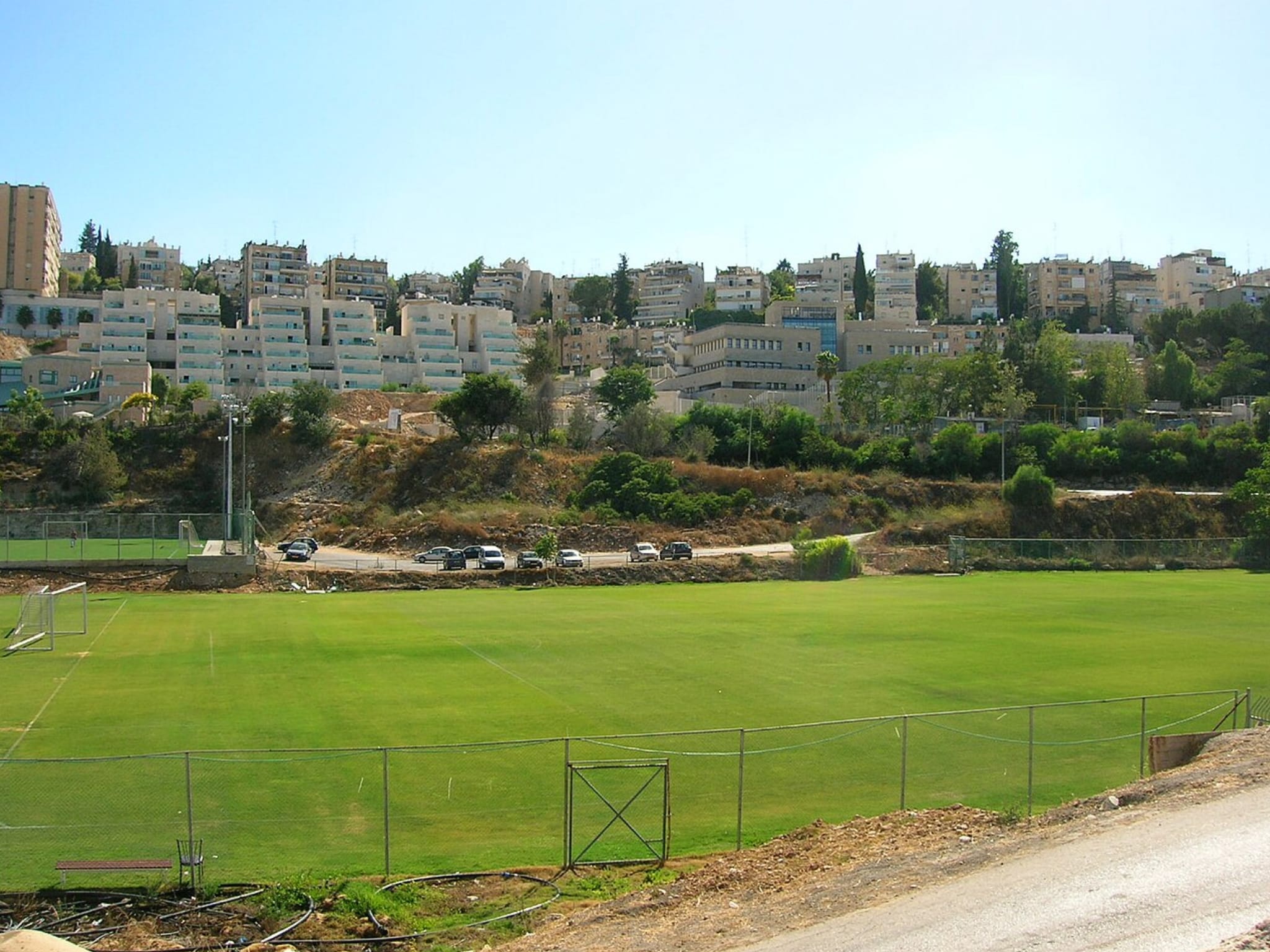
One of Jerusalem’s most ambitious and controversial development projects is entering the planning arena: the “Zion Valley – Innovation District” plan. Promoted by the Israel Land Authority in cooperation with the Jerusalem Municipality, the project covers approximately 194 dunams (48 acres) and proposes transforming the open area between the Beit Vagan neighborhood, the Givat Ram campus, Shaare Zedek Medical Center, and the Begin Road interchange at Beit Street into a vibrant new urban district. However, the plan carries significant environmental drawbacks and threatens to erase the historic training grounds of Beitar Jerusalem Football Club, potentially uprooting the club from its home of several decades.
What Does Jerusalem’s Zion Valley Plan Include, and What Will Happen to Beitar’s Training Grounds?
The project, presented as a vision for innovation and residential development, calls for 1,651 new housing units alongside hundreds of thousands of square meters dedicated to employment, offices, high-tech laboratories, educational institutions, and public facilities. Its central objective is to connect the area’s leading academic and medical institutions into an integrated hub for research, development, and residential living, taking advantage of its accessibility to Beit Street.
The plan is currently undergoing preliminary discussions at the Jerusalem District Planning and Building Committee ahead of its formal submission for public review. It must subsequently pass through the public objections stage, further committee deliberations, and statutory approval before land marketing tenders can be issued to developers. The land involved is estimated to be worth hundreds of millions to billions of shekels.
Supporters of the project, led by the Israel Land Authority and planning officials, view it as an essential strategic engine for Jerusalem’s economic and urban growth. They argue that combining advanced employment spaces with new residential units will attract a younger, highly skilled population, strengthen high-tech companies and academic institutions, and maximize the potential of centrally located land within the metropolitan area.
Opponents, however, are raising serious concerns. Environmental organizations, including the Society for the Protection of Nature in Israel, warn of severe damage to an ecological corridor and one of the city’s rare remaining open spaces. Residents of Beit Vagan and Beit Hakerem also fear that additional development will overwhelm existing transportation infrastructure, which already struggles to meet demand.
The most prominent potential casualty, however, is Beitar Jerusalem Football Club. The proposed development would be built directly on the club’s training grounds in Beit Vagan. Implementing the plan without first providing a ready-to-use alternative facility could seriously disrupt the club’s operations, particularly its youth academy. Community activists and public representatives are demanding that the project be delayed until a modern replacement complex is guaranteed, or that the sports fields be excluded from development altogether.
The Jerusalem District Planning and Building Committee must ultimately decide whether Zion Valley will become the city’s next leap forward in technological and urban development, or whether the environmental and community costs will prove too high.