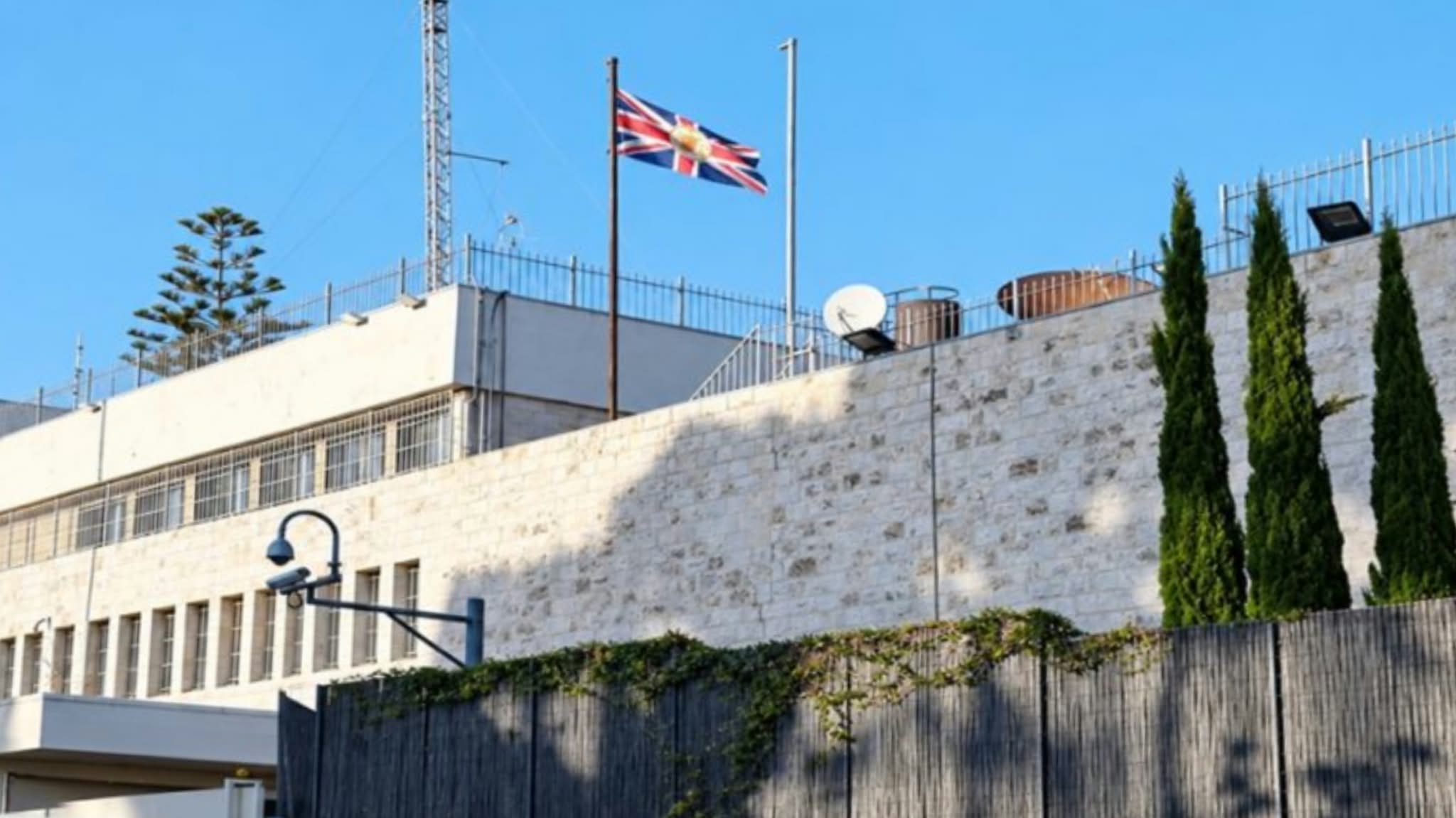
Does the removal of the sign from the British Consulate building in East Jerusalem on Thursday mark the end of the crisis between the two countries, or merely a temporary pause on an inevitable collision course? The escalating diplomatic confrontation between Israel and Britain has reached boiling point, yet behind the mutual statements of reassurance lies a far deeper conflict.
Tensions between Jerusalem and London did not emerge overnight. Since the Labour government came to power in July 2024, relations have steadily deteriorated. Britain has taken a series of unilateral measures, including restoring funding to UNRWA, suspending arms export licences to Israel, imposing sanctions on Israeli individuals and organisations, freezing military and security dialogue, and later unilaterally recognising a Palestinian state. From Jerusalem’s perspective, the final straw was the imposition of sanctions on products from Israeli settlements in the West Bank, accompanied by increasingly harsh rhetoric and accusations of “ethnic cleansing”.
Why Did Israel Order the Closure of the British Consulate in Jerusalem?
In response to these measures, Israel announced a series of retaliatory steps on September 8, including the removal of British representatives from the Gaza aid coordination centre, the suspension of training for Palestinian Authority security forces, entry bans on British elected officials acting against Israel, and an order to close the British Consulate General in Jerusalem, an institution that has operated in the city for nearly 200 years.
The two foreign ministers simultaneously issued statements claiming victory. Israeli Foreign Minister Gideon Sa’ar emphasised that Israel had implemented its principle of an appropriate response: “We established a clear principle: no one can act against Israel without Israel taking corresponding measures in response. The British Consulate in Jerusalem is ending its operations today, and the consulate’s sign has been removed.” However, he also noted that dialogue conducted in recent days had produced understandings aimed at preventing further deterioration.
Has the British Consulate in East Jerusalem Actually Closed?
British Foreign Secretary Ed Miliband, meanwhile, issued an official statement rejecting Israel’s position: “We have made clear that we do not accept that the Israeli government has the legal right to close the British Consulate General in Jerusalem… Our longstanding position is that East Jerusalem is occupied territory.” Miliband added that, following discussions, the building would not close but would instead operate under the name “British Mission, Jerusalem”, retaining its independence and continuing to provide services to the Palestinian population. He also stated that Britain had temporarily withdrawn some staff members because of security concerns.
Although both sides are presenting the outcome as a diplomatic achievement, with Israel pointing to the cancellation of consular status and removal of the sign, while Britain highlights the continuation of operations and its physical presence on the ground, the underlying dispute remains unresolved. Renaming the consulate may provide a temporary diplomatic bridge, but the profound disagreements over fundamental issues suggest that the next chapter of the conflict is only a matter of time.