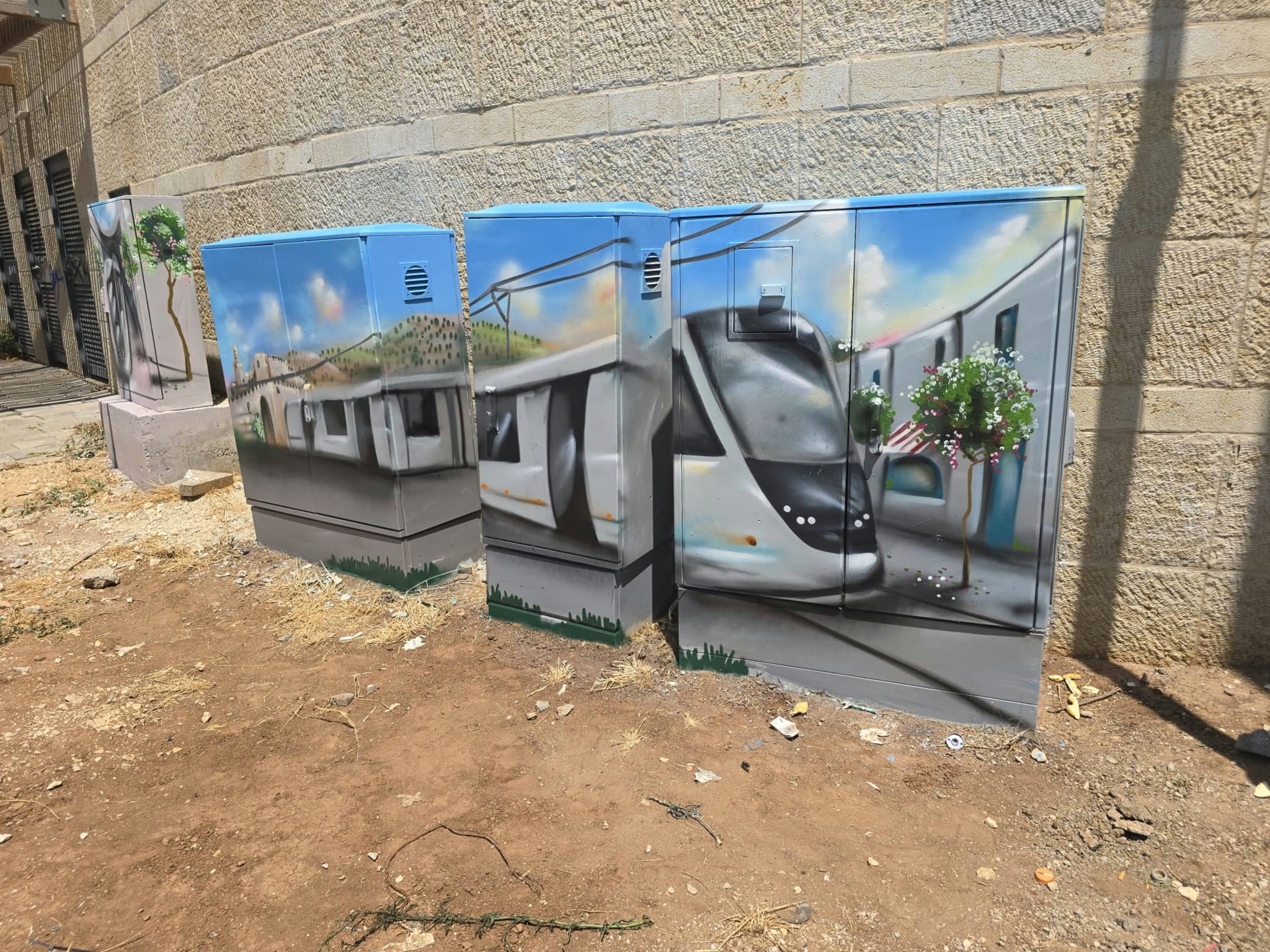
Electricity and water utility boxes scattered throughout Jerusalem are hardly the kind of attractions that make pedestrians stop and look. For years, they have been an almost invisible part of the urban landscape, gray installations serving purely practical purposes. Now, as part of a Jerusalem Municipality initiative, some are being transformed into colorful works of art reflecting their surroundings.
Behind the paintings is artist Elisaf Miara, a resident of the Gaza border region who has been working as an artist for approximately 20 years. Throughout his career, he has painted hundreds of protective shelters in northern and southern Israel, along with school walls, kindergartens, parks, and public facilities. The Jerusalem project began in Sacher Park before expanding into additional neighborhoods and locations across the city.
Rather than painting every installation in the same style, the idea is to tailor each work to its location. A utility box surrounded by greenery might blend into the natural landscape, while one in a historic neighborhood could incorporate architectural features and elements of local heritage.
How Are Jerusalem’s Utility Boxes Becoming Street Art?
The project is being carried out in cooperation with the Jerusalem Municipality’s Operations Administration, whose staff identify suitable installations for painting. Miara studies each location and designs his work around its surroundings, attempting to blur the distinction between urban infrastructure and the environment.
“My goal in this project is to take an electrical cabinet, something usually disconnected and out of place, and make it part of its surroundings,” Miara explained. “In Sacher Park, the painting will reflect the greenery and nature. In the Old City, it will have a traditional character and incorporate Jerusalem’s landscapes and buildings.”
For Miara, working in Jerusalem also carries personal significance.
“I have been a painter for 20 years, and I feel that all those years were actually preparation for the moment when I would have the opportunity to paint in the streets of Jerusalem,” he noted. “I have painted hundreds of protective shelters across Israel, but Jerusalem is something different for me.”
The initiative reflects a broader approach to integrating art into public spaces, where even entirely functional infrastructure can become a canvas. In Jerusalem, however, where the landscape changes dramatically between ancient neighborhoods, modern districts, and green spaces, adapting each work to its surroundings takes on particular significance.
Jerusalem Mayor Moshe Lion commented on the initiative, stating: “We invest not only in major infrastructure projects, but also in the small details that make public spaces more beautiful, pleasant, and welcoming. Transforming electricity and water utility boxes into works of art brings color, creativity, and life to our streets and neighborhoods.”
The painting work is continuing and is expected to expand in the coming months. For Miara, the real measure of success is not simply the beauty of the artwork, but whether residents passing these installations every day begin to see their familiar surroundings differently.