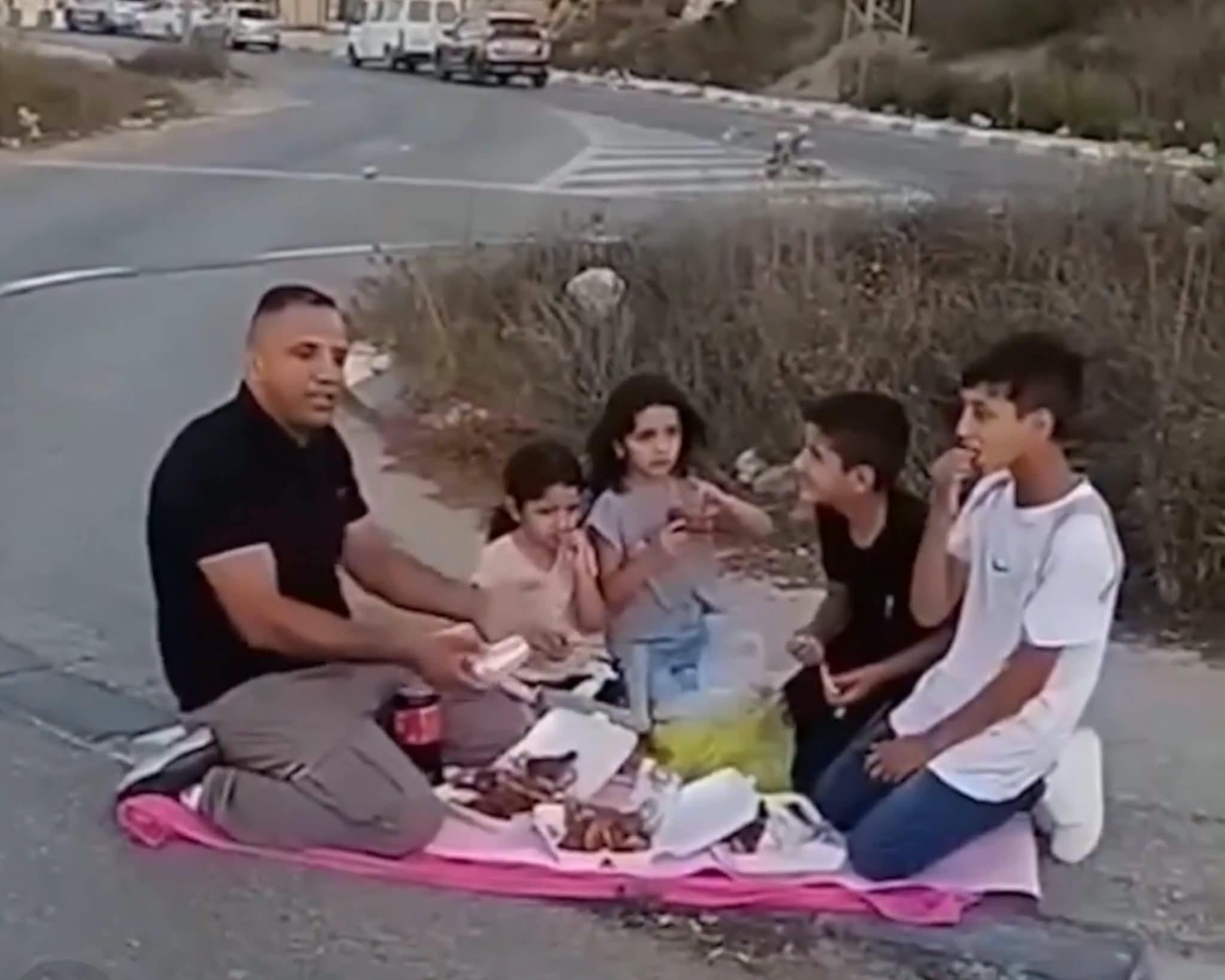
A video recently circulating on Palestinian social media illustrates the complex and grotesque reality of the seam zone surrounding Jerusalem: Handala Issa, a resident of the village of Beit Iksa northwest of the city, sits on the roadway near the military checkpoint and eats lunch with his young children.
The children came from inside the village, which Issa has been barred from entering for several days, and after the brief meeting they returned home without him. This incident, alongside Palestinian reports claiming that ten village residents have recently faced similar entry refusals due to stricter security criteria, is once again bringing the deep dispute over security procedures in the area to the surface.
Why Is the Beit Iksa Checkpoint Considered Critical to Jerusalem’s Security?
From the Israeli perspective, the Beit Iksa checkpoint in the Jerusalem area and the designation of the village as a closed seam zone are an operational necessity with no alternative. The village is located in an especially sensitive strategic position, directly overlooking some of the State of Israel’s most critical transportation and infrastructure arteries, including Highway 1, Highway 436, which connects Givat Ze’ev to Jerusalem through the nearby Ramot neighborhood, and the high-speed railway between Jerusalem and Tel Aviv. Since no separation barrier was built between the village and the Ramot neighborhood, the checkpoint serves as a final line of defense against the infiltration of illegal residents, weapons smuggling and the entry of terrorist elements into the heart of Jerusalem.
Security officials clarify that the decision to prevent certain individuals – Issa and the other nine – from entering is based on focused security considerations supported by intelligence information, and is intended solely to neutralize potential risks to Israeli citizens.
As for the entry of humanitarian personnel, such as teachers or medical teams, the system allows regulated passage, subject to advance coordination with the Coordinator of Government Activities in the Territories and the presentation of appropriate permits, with the aim of balancing civilian needs with ongoing security requirements.
Why Do Palestinians Say the Entry Policy in Beit Iksa Is Harming Residents’ Daily Lives?
By contrast, the Palestinian perspective presents a completely different reality. For village residents and human rights organizations, the case of Issa and the other residents facing a similar situation illustrates what they describe as an arbitrary policy of “security denial” that breaks up families and creates collective punishment.
According to them, at the end of 2025 Israel decided to require residents to carry special magnetic cards intended for the seam zone, whereas in the past an arrangement had been reached under which the Palestinian liaison would submit lists of names of people subject to “security prevention” so they could be allowed to return to their homes. Residents now say they were surprised to discover that these lists had been canceled and that passage was completely blocked for anyone who did not possess a magnetic card.
Palestinians argue that the strict supervision and bureaucratic obstacles imposed on teachers, doctors and ambulances are severely damaging the fabric of daily life, and that their real purpose is to create economic and demographic pressure that would make it easier to confiscate village land for the expansion of nearby settlements.