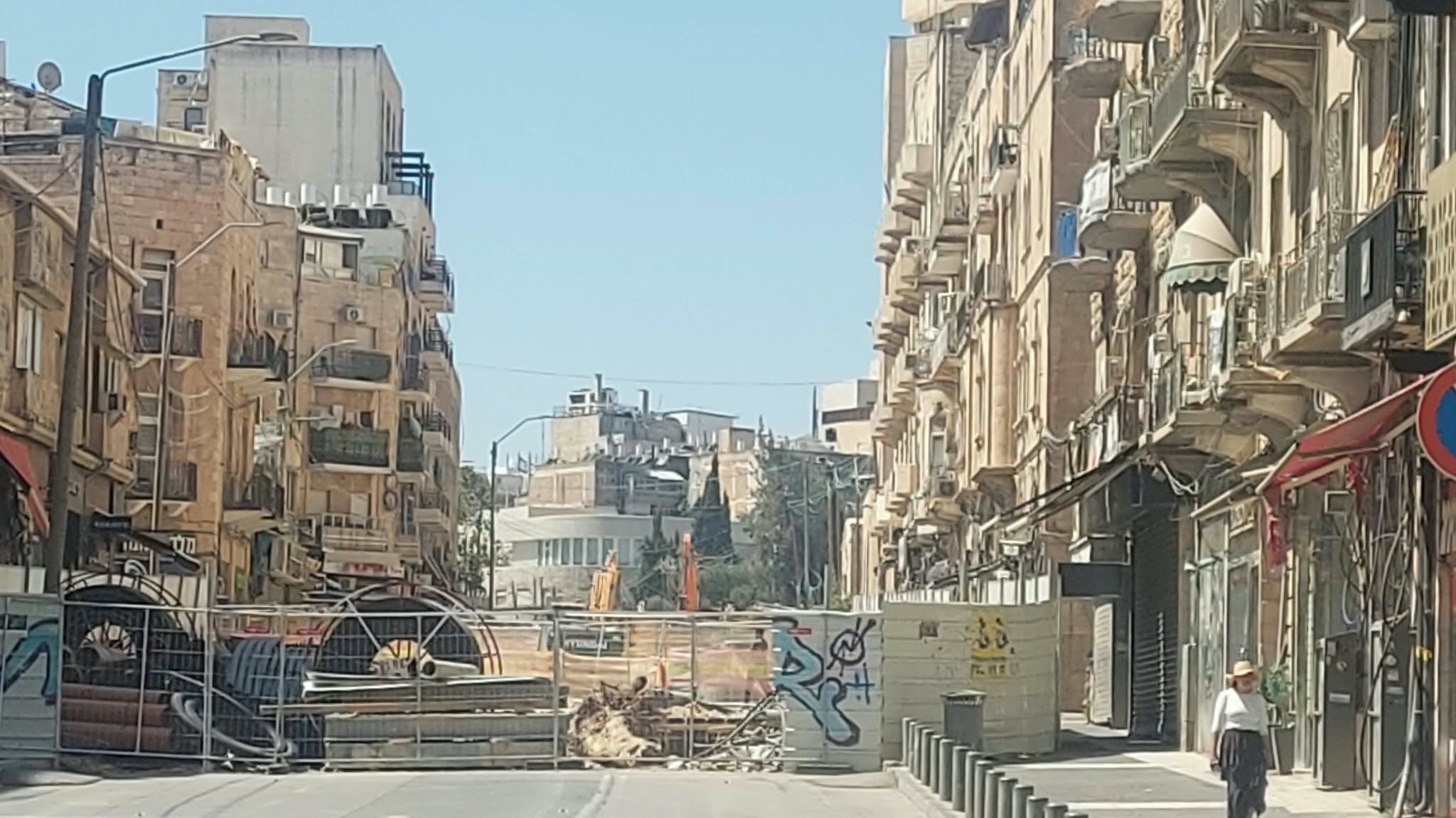
On the eve of the new school year, Jerusalem should be talking about children, schoolbags, teachers and the excitement of a fresh start. Instead, for thousands of families across the city, the more urgent question is much simpler: how are they supposed to get to school on time? For months, Jerusalem has been dealing with extensive infrastructure works, excavations, changing traffic arrangements, narrowed lanes and streets where a short drive can turn into an exhausting journey. In some areas, it is already difficult to remember what the street looked like before the fences, barriers, heavy machinery and dust. On a morning when tens of thousands of students, parents and staff members are all heading out at roughly the same time, even a small disruption can quickly turn into a major traffic jam.
How early will parents in Jerusalem have to leave home to reach school on time?
School hours have not changed, but the roads leading to them certainly have. A parent who needs to drop one child at school, another at kindergarten and then continue to work is now forced to plan the morning around almost complete uncertainty. A route that should take 15 minutes can stretch much longer because of temporary closures, roadworks, narrowed lanes or congestion around a major junction. The result is straightforward: parents who want to make sure their children arrive before 8 a.m. may have to leave home far earlier than they once did.
For families with children in different schools, the problem becomes even more complicated. Many parents in Jerusalem cross several neighborhoods every morning or depend on roads where construction has been continuing for a long time. One blocked street, one work vehicle slowing traffic or one jammed intersection can destroy the entire schedule. Some parents may end up dropping children off unusually early simply to avoid the risk of both the child arriving late and the parent reaching work well after the day has already begun.
Will Jerusalem’s traffic jams also disrupt workplaces across the city?
The congestion does not end when the children get out of the car. Parents then continue to offices, shops, hospitals, businesses and workplaces across Jerusalem. When thousands of families are moving through the city during the same narrow morning window, delays on the way to school quickly become delays at work as well. An employee who loses half an hour in traffic cannot recover that time simply by driving away from the school gate.
For employers, the concern is not only the first day of school. If infrastructure works continue to weigh heavily on traffic in the coming weeks, repeated morning delays could become part of the routine. Employees may try leaving earlier, changing routes, using public transport or finding alternatives to driving children directly to school. But every such solution means residents once again have to adapt their lives to a city where getting from one point to another has become increasingly difficult to predict.
What happens if Jerusalem’s teachers are the ones stuck in traffic?
This is where the situation becomes almost absurd. The education system expects students to arrive on time, but teachers travel on exactly the same roads, sit in exactly the same traffic jams and pass exactly the same construction sites. A teacher who needs to open a classroom at 8 a.m. cannot know whether a 20-minute journey will remain a 20-minute journey or suddenly turn into 45 minutes. And many teachers are parents themselves, meaning they first have to get their own children to school before trying to reach their workplace.
A late office worker creates a problem. A late teacher or kindergarten teacher can immediately create a system-wide one, because a classroom full of children cannot simply remain without staff. If several teachers at the same school are delayed at once, administrators may be forced to improvise from the very first hour of the day. Jerusalem’s school year could therefore begin with an almost ironic message: everyone is expected to arrive on time, while the city itself is still struggling to provide them with a reasonable way to do so.