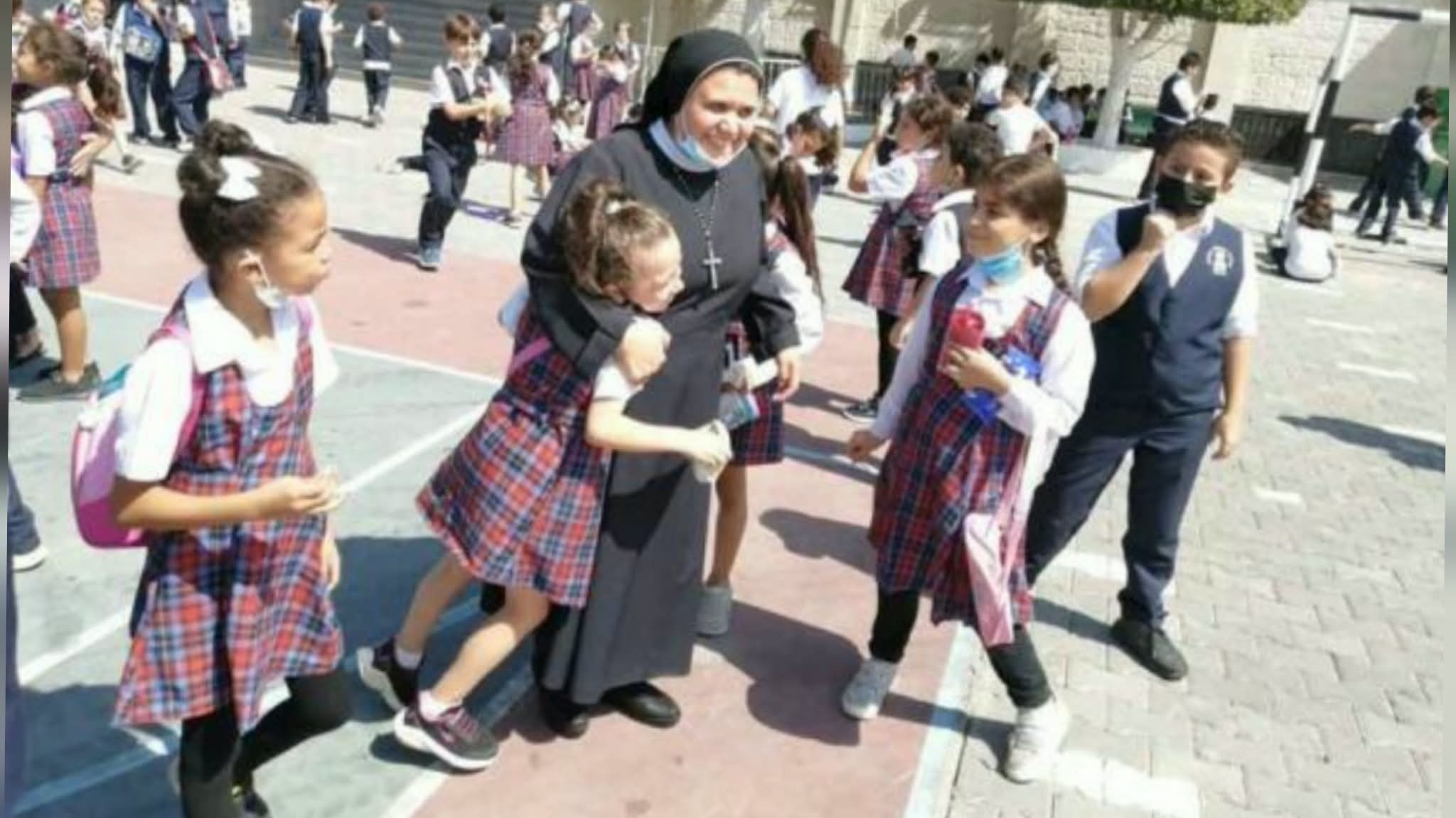
Thousands of students at private Christian schools in East Jerusalem stayed home as the school year opened on September 1. The General Secretariat of Christian Educational Institutions in the city announced that all schools under its supervision would suspend classes until security entry permits to Jerusalem are renewed for more than 70 teachers and other educational staff members who are residents of the West Bank. The decision affects more than 8,500 students – Christians and Muslims alike – who attend prestigious institutions such as Terra Sancta, De La Salle College and the Rosary Sisters schools.
The Secretariat said in its statement that the failure to renew the permits came “suddenly and without prior notice,” and harms its ability to ensure a safe opening of the school year – including educational, administrative, health and security aspects.
Why do Christian schools in East Jerusalem oppose the Israeli curriculum?
The current crisis does not stand on its own. It is unfolding against the backdrop of an ongoing struggle over the curriculum in East Jerusalem – between the Israeli curriculum, which leads to the Israeli matriculation certificate, and the Palestinian curriculum, which culminates in the Tawjihi examinations.
Since 2018, Israel has allocated preferential funding to schools that adopt the Israeli track, as part of the plan to integrate residents of the eastern part of the city. The results are visible: in the new school year, some 45,000 students in the municipal system are expected to study according to the Israeli curriculum – for the first time since 1967, including all new first- and seventh-grade students. This represents about 38% of all students in East Jerusalem.
In Israel, the move is seen as a genuine opportunity: the Israeli curriculum opens doors to universities, the job market and broader Israeli society. It also enables oversight of educational content and the prevention of incitement. For years, the Education Ministry and the Jerusalem Municipality have stressed that Palestinian textbooks have previously included maps without Israel, glorification of terrorism and the erasure of the Jewish connection to Jerusalem – content that contradicts UNESCO’s international standards for education for peace.
Private Christian schools, by contrast, largely oppose the transition. They remain committed to the Palestinian curriculum, or to a combination with international programs, and view Israeli pressure as an attempt “to erase Palestinian identity.” Only a small minority have opened Israeli matriculation tracks, which provide better opportunities for children. These institutions, some of which have operated for hundreds of years, are considered high-quality schools and also serve many Muslim students.
At the same time, these institutions’ dependence on teachers who are residents of the West Bank and travel through checkpoints every day makes them particularly vulnerable to movement restrictions that have been tightened since the October 7, 2023 attack. From the Israeli perspective, entry permits are not merely a technical matter. They are a tool for managing the security implications of Palestinians entering Jerusalem from the West Bank, amid continuing threats to the city. Following the October 7 massacre, restrictions were dramatically tightened, and some remain in force. Israel is not obligated to allow teachers from West Bank areas unrestricted access to private institutions, particularly when there is an option to recruit local teachers or rely on the Israeli curriculum. The move is also viewed as part of an effort to strengthen ties to a united Jerusalem and reduce the Palestinian Authority’s influence over education in the city.
Many parents in East Jerusalem are already choosing the Israeli track for pragmatic reasons: it gives their children a better chance for the future. Christian schools, however, continue to insist on their independence – even at the cost of repeated disruptions to studies.