Countless words have been written, and will continue to be written, about the drama that unfolds every day at Rachel’s Tomb on the outskirts of Jerusalem. The daughters of Israel arrive carrying what is missing from their lives, along with hope and faith that remain within the walls of the site. Just before the Jewish New Year, the start of the school year in Israel and the light local rain, none of it stops them from making their way to Rachel’s Tomb.
Leaving Jerusalem toward the road to Bethlehem, between the olive groves and women from every corner of Israeli society, another story emerges: the human need for a mother one can come to, unload one’s heart to and share with, when there is no longer anyone who can compare to her.
Why Does Jerusalem’s Bus 163 to Rachel’s Tomb Fill Up During Elul?
The bus stop for Route 163 in Jerusalem, which travels to Rachel’s Tomb, is crowded. It is the end of the Hebrew month of Elul and the beginning of September on the international calendar, and it seems that this time there are people whose priorities are stronger than any timetable. Even the local rain does not cause anyone waiting at the stop to change their plans.
The journey south reveals the olive groves, carrying with them a promise of the approaching harvest season. Ancient and beautiful olive trees stand in precise rows, as though an engineer’s hand had arranged a ceremonial formation of trees to welcome those arriving. Rachel our Matriarch has become a symbol that has survived generations, wars and crises. A mother people come to in times of calm, but especially when the home, both within and without, is troubled and in crisis.
Much has already been written, and more will be written, about Rachel, the wife of the biblical Jacob, mother of Joseph and Benjamin, who died while giving birth to him and was buried on the road to Ephrath, near Jerusalem. It seems that the more interesting question is what more can still be told about her, and what continues to bring people to her, generation after generation, thousands of years later?
They come seeking comfort and hoping to find a little hope with the mother identified with weeping for her children. During the difficult years Israel has experienced recently, many came here to pray for the return of the hostages. Others speak of prayers that were answered, miracles and moments in which they found the strength and courage here to continue with their lives.
What Do Women Ask for at Rachel’s Tomb Ahead of the Jewish New Year?
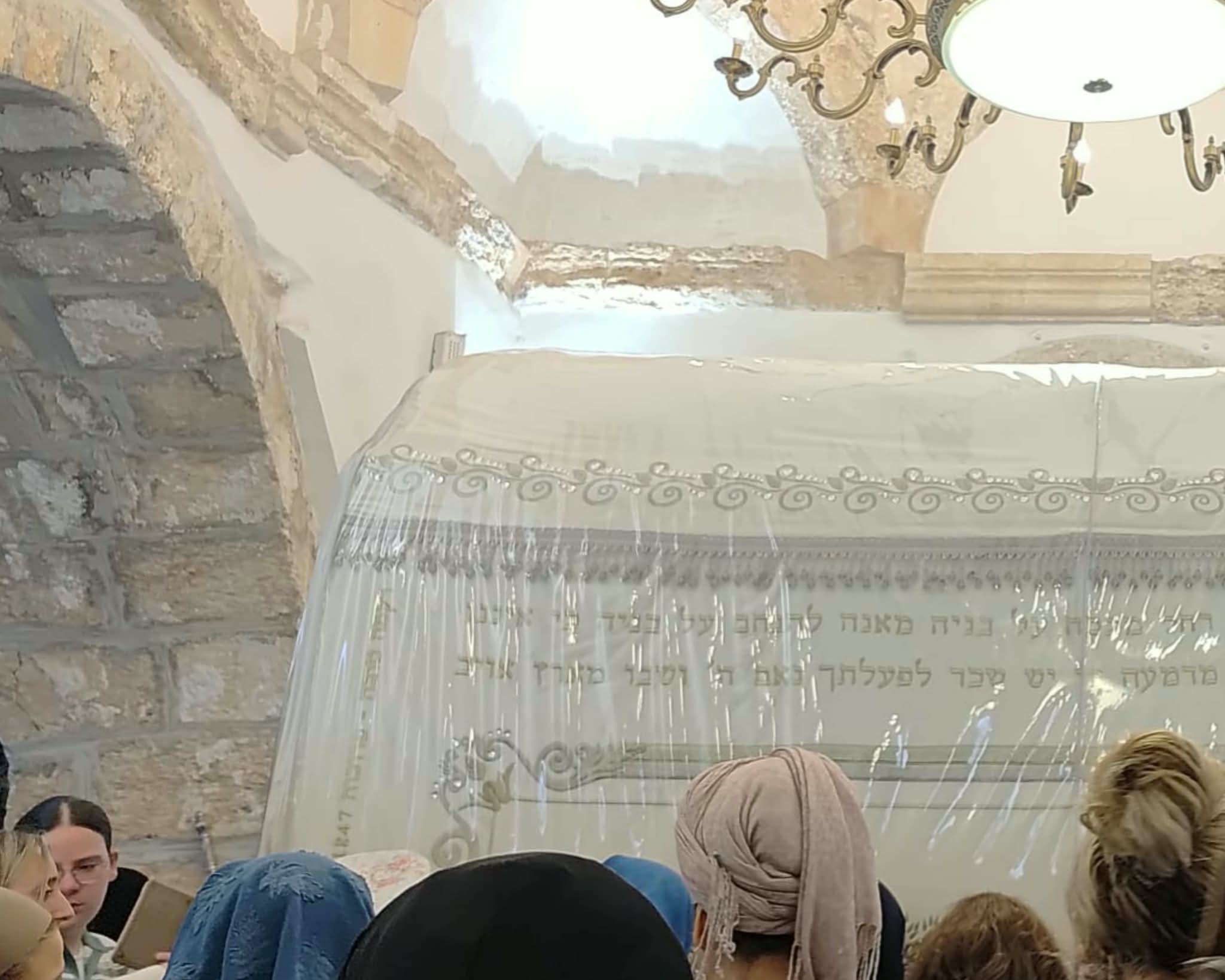
Around the tomb, women from every sector of society crowd together, ultra-orthodox and secular, young and elderly, from across Israel. They kiss the silver mezuzahs and pray with devotion from books of Psalms, prayer books and Selichot. The Jewish New Year is already around the corner, and each woman arrives with a plea for what is missing in her life. Prayers for the children, the grandchildren, the husband, the daughters-in-law, and sometimes a request known only to the heart.
And perhaps this is precisely where the secret of the place lies. Not only in what they ask for, but in the very decision to share it with someone who herself suffered greatly in her life. This is the place people come to in order to find an answer, to touch hope, to feel that someone is listening and to leave strengthened by a mother’s embrace.
“A voice is heard in Ramah, lamentation and bitter weeping, Rachel weeping for her children, refusing to be comforted.
Restrain your voice from weeping, for there is a reward for your work.
Again you shall be built and rebuilt…”
(from the sources).
These are the words that have strengthened an entire nation throughout the ages, and those who ascend to the tomb of the woman for whom fourteen years were spent waiting before she could be taken as a wife. Rachel! May her merit protect us.