How much of the Jerusalem we know actually lies above ground? During the week, Jerusalem Border Police officers entered a compound in Silwan as part of an operational effort to deal with the violent conflict between families in the village. They conducted searches and escorted representatives of public authorities at a compound where people involved in the incidents reside, but at a certain point the operation took a completely unexpected turn.
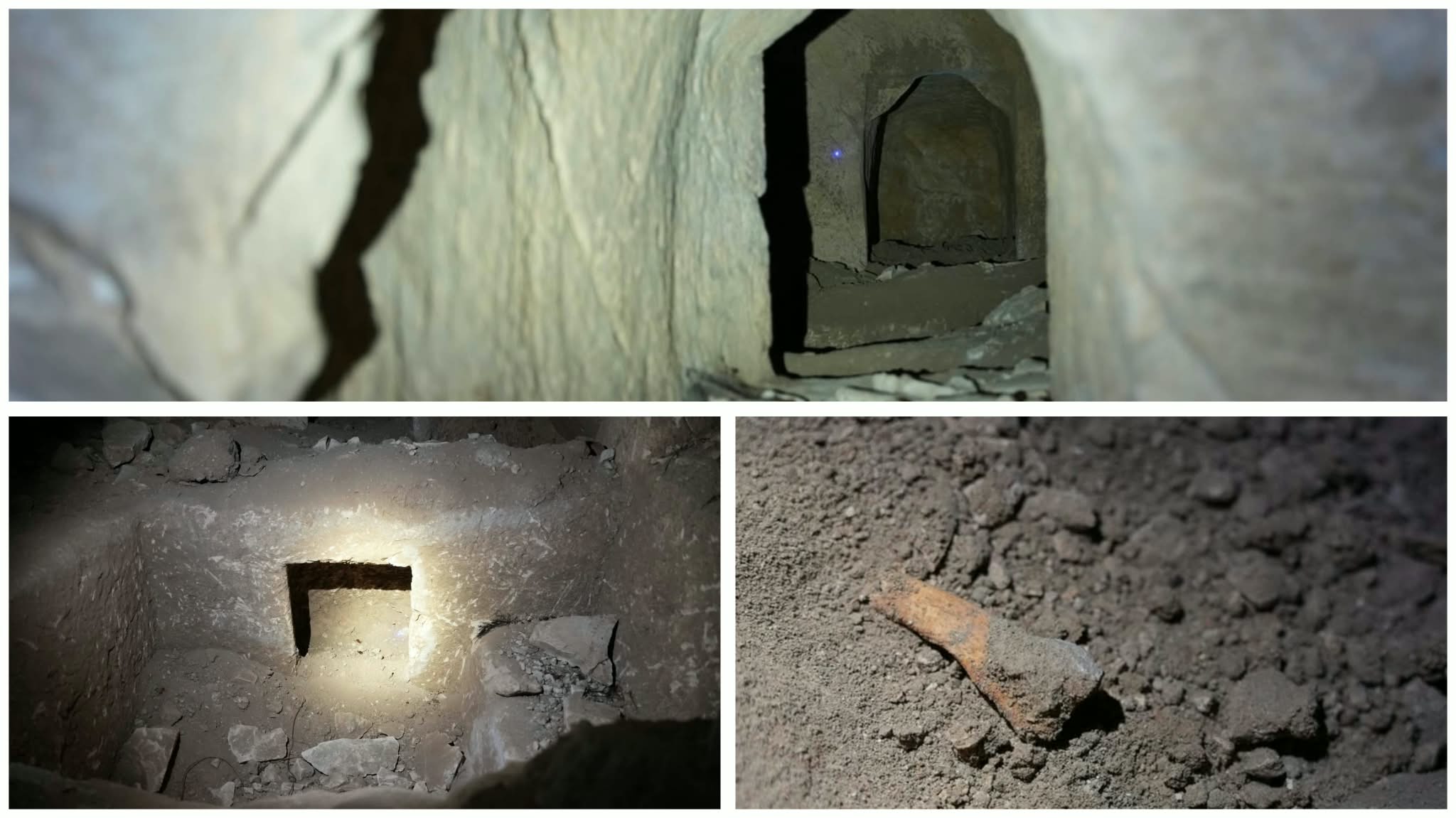
Beneath a building, the officers uncovered an ancient burial cave along with additional archaeological findings. Israel Antiquities Authority professionals who arrived at the site carried out an initial examination, which indicated that the graves date to the Second Temple period. In an instant, a police operation in Jerusalem in 2026 opened a window into the city of roughly 2,000 years ago.
How did a Jerusalem Border Police operation lead to the discovery of a burial cave in Silwan?
The discovery was not made during a planned archaeological excavation. The forces were operating in Silwan as part of the police effort to reach the homes of those involved in the family conflict, and during the activity the underground space beneath the building was exposed.
Jerusalem District Police stated: “The operational activity of the Jerusalem District as part of the violent conflict between families in the village of Silwan is continuing today, with the aim of reaching the home of every person involved. During the activity, Jerusalem Border Police officers uncovered a burial cave and additional archaeological findings beneath a building.”
Police and Border Police forces secured the scene while representatives of the Israel Antiquities Authority began handling the findings. At this stage, the examination is only preliminary, so it is still impossible to determine who was buried there, the full extent of the burial site, or what additional findings may remain inside.
What is really hidden beneath the ground in Silwan, Jerusalem?
The cave uncovered now is not an isolated discovery in an area without an archaeological past. Silwan and the nearby Kidron Valley lie at the heart of a zone where burial caves and archaeological remains from different periods have been uncovered over the years. In 2001, for example, infrastructure work in the Ein el-Loza area of Silwan breached a burial cave. An asphalt road had covered its entrance for years, and only the work exposed the underground space again.
The Kidron Valley also served for long periods as one of ancient Jerusalem’s burial areas. Archaeological research describes it as one of the city’s main burial zones during the First Temple period, while many additional burial caves were hewn there during the Second Temple period. Three elaborate caves previously uncovered in the area contained pottery and glass vessels, jewelry, a sarcophagus and ossuaries, some bearing inscriptions.
In other words, beneath the homes, roads and infrastructure of modern Jerusalem, spaces still exist that were used by the city’s residents hundreds and even thousands of years ago. Not all of them are known, accessible or excavated, and sometimes it is infrastructure work, construction or an unexpected event that reveals them again.
How much of Jerusalem’s past is still waiting beneath its homes?
At this stage, there is no way to know what else lies beneath the compound where the newly discovered cave was found, nor is there any basis for concluding that the discovery indicates the existence of additional caves nearby. But the archaeological history of the area shows that encounters between present-day Jerusalem and ancient Jerusalem are hardly unusual.
In Silwan and around the Kidron Valley, modern life takes place above an area that served for generations for habitation, burial and other forms of human activity. What can be seen above ground is therefore only part of the picture.
This time, Border Police officers arrived because of a family conflict and unexpectedly uncovered a Second Temple period burial space. Next time, it could be a road being opened, infrastructure being replaced or construction work. In Jerusalem, sometimes all it takes is going a few meters underground to discover that the city of 2,000 years ago is still there.